
Takayama
Japan
East Asia · Best time: Spring (April-May); Autumn (September-October); Winter (December-February)

Tucked into the Japanese Alps, Takayama feels like the Kyoto everyone wishes they'd visited fifty years ago. The old merchant quarter—the Sanmachi district—still has its Edo-period bones intact: dark wooden storefronts, overhanging eaves, sake breweries marked by cedar balls hanging above their doors. But here's the thing: this isn't a recreated theme park. People actually live and work in these buildings. The sake makers are still brewing. The woodworkers are still carving. You're not observing preserved history; you're walking through a town that simply never bulldozed its past.
What sets Takayama apart is its dual identity. Yes, it's known as "Little Kyoto of Hida," but it's also a working mountain town where traditional craftsmanship never stopped. At the Hida Folk Village, you'll see the famous gasshō-zukuri houses—those steep thatched roofs built to handle brutal snowfall—transplanted from surrounding villages, with artisans still practising their trades inside. The festivals in April and October (Sannō Matsuri and Yahata Matsuri) bring out elaborate floats with mechanical dolls that have been parading these streets since at least the 17th century. They're not performing for tourists; they're continuing something that predates the idea of tourism.
The town rewards early risers and wanderers. The morning market along the Miyagawa River is where locals still shop for vegetables and pickles. The side streets off Sanmachi reveal family-run workshops where you can watch lacquerware being made or try your hand at crafts yourself. Because Takayama was directly controlled by the Tokugawa shogunate and its castle was demolished centuries ago, it developed as a merchant town rather than a military one—which means the culture here grew around making beautiful things, not displaying power. You feel that difference in the streets.
Why It's Unbeaten
Takayama sits in the shadow of Kyoto and Tokyo, two cities that vacuum up most Japan-bound tourists. Most visitors who make it to the Japanese Alps head straight to Nagano or the skiing resorts, missing this beautifully preserved castle town entirely. What they're missing is arguably the most intact traditional streetscape in Japan outside Kyoto—but without the crowds, the inflated prices, or the Instagram-tourism circus. Takayama has managed to stay quiet because it requires deliberate effort to reach and offers none of the obvious Instagram moments that drive mainstream travel. There's no famous temple to tick off, no cable car view, no 'must-see' that gets plastered across travel blogs. It's the kind of place where your reward is actually experiencing Japanese mountain culture rather than performing it for social media.
The Reward
Morning mist clings to 300-year-old sake breweries while Tokyo tourists sleep through their Shinkansen alarms.
Visit instead of: Kyoto — Same temples, shrines, and geisha culture, but with a fraction of the tour-bus crowds and stronger mountain scenery.
Ideal For
Families with children, History and architecture enthusiasts, Slow travellers seeking cultural immersion, First-time Japan visitors, Photographers, Couples and small groups
Not Ideal For
Party/nightlife seekers, Beach lovers, Backpackers on ultra-tight budgets, Those seeking anonymity in large cities
Recommended Stay
Siem Reap Province (beyond Angkor)
Cambodia
Southeast Asia · Best time: November to February (Dry Season); March to May (Hot Season); June to October (Monsoon/Wet Season)
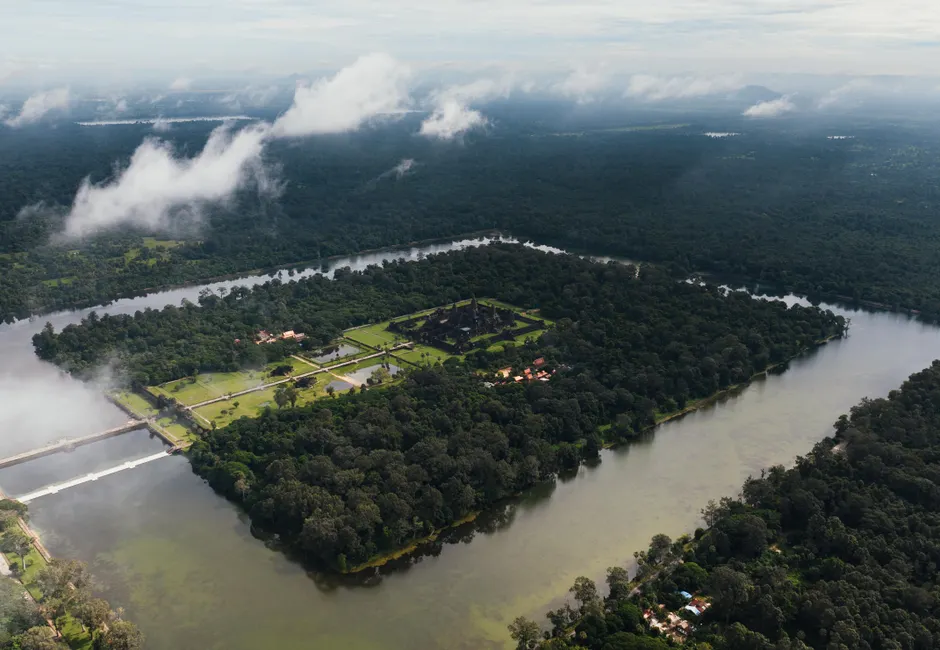
Most people never make it past the temples. They helicopter into Siem Reap, tick off Angkor Wat at sunrise, maybe catch Ta Prohm if there's time, then vanish to Thailand or Vietnam. Which means the rest of Siem Reap Province—floating villages that actually float, forests where you'll hear more gibbon calls than camera shutters, and countryside so green it looks Photoshopped—remains bizarrely empty. This is where Cambodia breathes.
Head north to Phnom Kulen, the sacred mountain where the Khmer Empire was born in 802 CE. Yes, there are carvings in the riverbed at Kbal Spean, but more importantly, there are swimming holes where Khmer families picnic on weekends and you can buy still-warm purple sticky rice wrapped in banana leaves from vendors who've been coming here for decades. Or go the opposite direction to Beng Mealea, a temple so swallowed by jungle that you're essentially climbing through a three-dimensional puzzle of roots, stones, and shadows. You'll share it with maybe twenty other visitors and a guide who knows which collapsed doorway leads to a hidden library.
The real revelation, though, is the countryside between these sites. Rent a bike in Siem Reap town and ride Route 67 toward Banteay Srei through villages where silk weaving still happens on wooden looms under stilted houses, where kids practice traditional apsara dance in temple courtyards after school, where someone will inevitably wave you over for palm sugar tea. Stop at Preah Dak village to watch artisans carve the same stone that built Angkor—their great-grandfathers taught them, and they're teaching their sons. Around Kompong Phluk on Tonlé Sap lake, entire communities rise and fall six meters with the seasons, houses on stilts so tall they look like something from a fever dream. Go during the rainy season when the water's high and the mangrove forests are navigable by canoe—you'll glide through submerged forests where fishermen check traps and kids paddle to school, utterly unfazed by the magic of it all.
Why It's Unbeaten
Siem Reap Province beyond Angkor exists in the shadow of one of the world's most famous archaeological sites. Ninety percent of visitors arrive with a narrow itinerary: fly in, hire a tuk-tuk to Angkor Wat at dawn, spend 2-3 days temple-hopping, then leave. The province's rural landscapes, artisan communities, and water-based ecosystems barely register on standard tourist maps. What gets missed: traditional silk weaving villages, floating villages on the Tonlé Sap Lake, rice paddies that stretch to the horizon, and guesthouses run by local families who've never seen a tour group. Most tourists don't realize that Siem Reap town itself is only the jumping-off point—the real province extends far beyond it, where you'll find authentic Khmer life unfiltered by the hotel lobby.
The Reward
Beyond the temple crowds, floating villages on Tonlé Sap lake rise and fall with monsoon waters, entire communities drifting seasonally.
Visit instead of: Angkor Archaeological Park — Discover authentic Khmer culture and temples without the massive tour groups and entrance fees that dominate the main complex.
Ideal For
Cultural immersion travellers, History enthusiasts, Families seeking alternatives to crowded sites, Slow travellers, Community-focused visitors
Not Ideal For
Party seekers, Beach holiday hunters, High-luxury resort visitors, Those seeking very short trips
Recommended Stay
Loading...