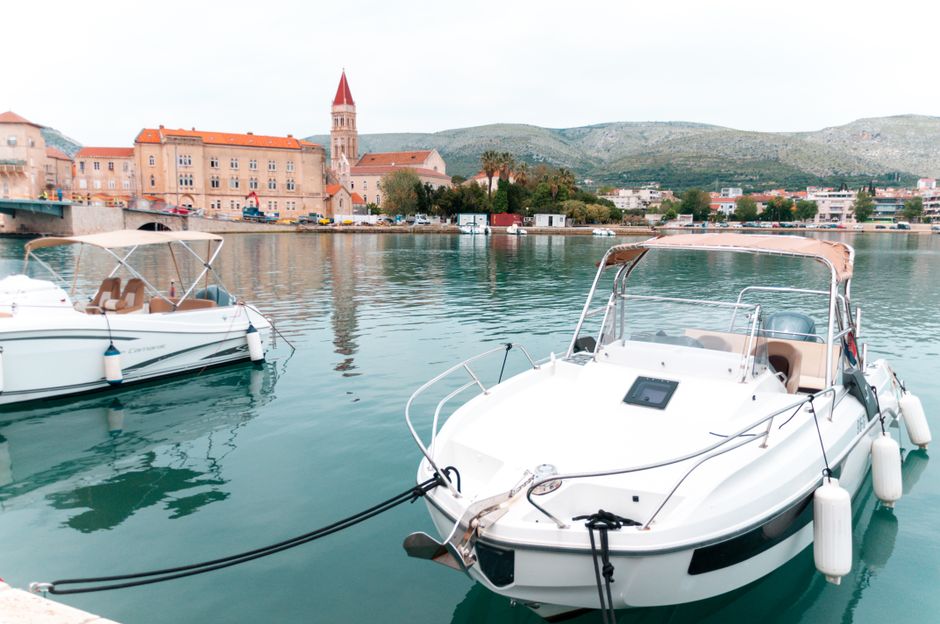
Trogir sits on a tiny island connected to the mainland by a short bridge, and within its 500-meter width lies one of the Mediterranean's most intact medieval town centers — a place where 13th-century stone narrows into passageways barely wide enough for two people to pass.
The Cathedral of St. Lawrence anchors the main square with its Radovan Portal, a 1240 masterpiece of Romanesque stone carving that depicts months of the year through agricultural scenes so detailed you can identify individual grape varieties. Walk Gradska ulica at 7am before the day-trippers arrive from Split, and you'll have the polished limestone underfoot entirely to yourself, with morning light catching the carved lion heads and Renaissance loggias that jut from golden facades.
Unlike Dubrovnik's stage-set perfection or Split's urban sprawl, Trogir operates as an actual working town where locals still outnumber visitors outside cruise ship hours. The Riva waterfront fills each evening with families promenading past moored fishing boats, while the konoba Kristian on Matije Gupca serves brodet — a fisherman's stew of scorpionfish, mussels, and octopus simmered with wine and polenta — using recipes unchanged since the restaurant opened in 1964. The Kamerlengo Fortress at the western tip offers sunset views across to Čiovo Island without the crowds that pack Dubrovnik's walls, and its summer concerts echo off 15th-century Venetian stone in a way that feels like discovering a secret.
The town rewards slow exploration: noticing the mismatched columns in the Monastery of St. Nicholas where Kairos, the Greek god of opportunity, grins from an ancient Greek relief reused as building material; finding the narrow stairs up to the City Loggia's terrace; ordering fresh sea bass at Konoba TRS on the north side where locals eat, not where tour groups stop. Trogir gives you medieval architecture at Dubrovnik's caliber with Split's accessibility and none of the I'm-being-herded-through-a-monument feeling that plagues Croatia's biggest draws.
Photo by Hert Niks on Pexels
Why it's Unbeaten
Out of the main current, in the right way.
The simple answer is Split. Croatia's second city is just 30 kilometers away, and it hoovers up the cruise ships, the Game of Thrones tours, the day-trippers from Dubrovnik. Split's Diocletian's Palace is extraordinary, but on a summer afternoon it can feel like a particularly beautiful shopping mall. The tourists who do make it to Trogir often come on rushed half-day excursions — they see the cathedral, eat lunch, and leave.
This works entirely in your favor. Stay overnight and Trogir transforms. By 7pm the tour buses have gone and the town belongs to residents and the handful of travellers who've figured out the trick. You'll eat dinner in a courtyard where you're the only foreigners, watch the sunset from Kamerlengo's walls with maybe a dozen other people, and wake up to church bells and the clatter of the fish market before the day-trippers return.
Trogir also lacks the obvious beach appeal that draws crowds to Hvar or the party reputation of Split. It's a town for wandering, for sitting in squares, for slow afternoons — which makes it self-selecting for a certain kind of traveller.
The main event
What you'll actually do in and around Trogir
01
Trogir Cathedral (Katedrala sv. Lovrijenaca)
A masterpiece of Romanesque architecture with a bell tower you can climb for views that stretch to the Dalmatian islands. The interior is surprisingly ornate—frescoes, carved stone doors, and a sense of sacred quiet that feels rare in touristed Europe. Go early (before 10am) when cruise-ship crowds haven't arrived.
02
Wandering the Old Town alleys at dusk
Forget guidebook attractions—the real magic is getting genuinely lost in these 13th-century streets, where laundry hangs between buildings and elderly locals sit on doorsteps. You'll stumble onto tiny piazzas with single cafe tables, neighborhood bakeries, and the smell of night-blooming jasmine. This is how you actually *feel* a place.
03
Čiovo Island walk and beach
Cross the drawbridge or walk along the narrow connector to Čiovo, where a coastal path leads past fishing villages and secluded pebble beaches. Unlike Hvar's yacht crowds, you'll find locals swimming and the silence of the Adriatic. Stop at a waterfront konoba for grilled squid and white wine.
04
Trogir Museum (Musej Trogirskog primorja)
A modest but beautifully curated collection of Roman artifacts, medieval stonework, and local maritime history. It's quiet, manageable in an hour, and gives genuine context to what you're seeing in the streets. The staff are often happy to chat if you show genuine interest.
05
Sunset from Kamerlengo Fortress
A short walk from the Old Town, this 15th-century fortress offers unobstructed views of the coast, islands, and the town itself bathed in golden light. Bring a bottle of local Dalmatian wine and sit quietly—you'll understand why Venice chose this spot to build.
06
Day trip to Dalmatian Islands (Šolta, Vis, or Brač)
Trogir is a ferry hub for nearby islands. Šolta is closest and least touristy, with olive oil farms and quiet beaches. These islands move slower than Hvar or Korčula and reward curiosity—rent a scooter, get genuinely lost, and eat where locals eat.
Taste of Trogir
Where to eat
Trogir's food is pure Dalmatian coastal cooking—fresh fish, local olive oil, stone fruits, and wine from nearby vineyards. The Adriatic is literal meters away, so seafood isn't a luxury, it's the foundation. You'll notice the menu doesn't change much seasonally because they use what the sea and land are giving them *now*. Pasta here is often homemade pappardelle with wild boar or seafood ragù. The wine culture is serious—local Dalmatian whites (Grk, Posip) and reds (Plavac Mali) pair perfectly with grilled fish. Skip the tourist-facing restaurants on the main waterfront; the real food happens in unmarked konobas tucked into alleys where fishermen eat lunch.
Konoba TrogirA tiny, no-frills place where the owner cooks what was caught that morning. The grilled dentex or squid is exceptional, and the house white wine is exactly what you want. It's crowded, loud, and perfect—locals eat here before tourists even wake up.
Restoran MediteranA step up in formality but still genuine—exceptional risotto with scallops and local white fish prepared simply. The terrace overlooks the waterfront without the carnival atmosphere of the main promenade. Order whatever isn't on the menu; the chef will make it better.
Caffe MarkoMore of a café/bar, but the pasta dishes and fresh salads are outstanding value. This is where you eat lunch like a local—quickly, well, and for €8–12. The house-made sausage is worth a return visit alone.
02 / The honest read
Is Trogir your kind of trip?
Best for
+ History and architecture enthusiasts
+ Couples seeking romance
+ Solo travelers
+ Photographers
+ Food and wine lovers
Think twice if you want
x Nightlife seekers
x Beach resort travelers
x Those wanting all-inclusive experiences
x Travelers with severe mobility issues
Effort and reward
Planning
2/5
Physical effort
1/5
Self-reliance
4/5
Scenery
4/5
Culture
5/5
Difficulty breakdown
What "2/10" actually means
Language barrier2/10
English is widely spoken in tourism contexts, with signs and menus commonly translated; older locals in surrounding villages may speak less English.
Logistics2/10
Excellent bus connections to Split airport and city, well-organized ferry schedules, and most services are concentrated in a walkable area.
Physical demand3/10
The compact old town is mostly flat but entirely cobblestoned; some cathedral tower climbs offer elevated views for those seeking them.
Infrastructure2/10
Modern EU-standard infrastructure with reliable utilities, excellent accommodation options ranging from hostels to boutique hotels, and good internet connectivity.
Trogir is one of the most accessible 'unbeaten path' destinations—close enough to Split for easy arrival, small enough to avoid mass tourism chaos, yet packed with authentic Dalmatian character. The main challenges are navigating cobblestones and the summer heat rather than any logistical hurdles. This makes it ideal for travelers seeking cultural depth without expedition-level difficulty.
Read this before booking
The honest caveats
Trogir is small—genuinely small. If you're planning to stay 4+ days, you'll run out of new streets to wander and may feel the limitation. Summer (July–August) brings cruise ships that dock nearby, and while they don't flood Trogir like Dubrovnik, the waterfront cafés do get a midday rush of day-trippers. The Old Town has no cars, which is wonderful, but it also means steep, uneven stone streets and zero accessibility for mobility challenges. Accommodation books up quickly in peak season, and some guesthouses are genuinely basic—check reviews carefully. Also: if you're seeking beaches and swimming, Trogir itself doesn't have great ones; you'll need to take a short ferry or walk to Čiovo. Finally, the town can feel slightly melancholic off-season (October–April), when some restaurants close and the energy drops noticeably.
Safety & health
Trogir is exceptionally safe for travelers, with violent crime being extremely rare. The main concerns are petty theft in crowded tourist areas during peak summer season—keep valuables secure and be aware of your surroundings on busy promenades. The cobblestone streets of the UNESCO-listed old town can be slippery when wet, so wear appropriate footwear. Swimming is generally safe at local beaches, though some rocky areas require water shoes, and strong currents can occur near channel openings.
No special vaccinations are required for Croatia beyond routine immunizations. Tap water is safe to drink throughout Trogir and the Dalmatian coast. The summer sun is intense—heat exhaustion and sunburn are real risks, so stay hydrated and use strong sunscreen. Pharmacies (ljekarna) in Trogir can handle minor ailments, and the nearest major hospital is in Split, about 30 minutes away, which has excellent facilities.
Croatia has a reciprocal healthcare agreement with EU countries (EHIC/GHIC cards valid), but US and UK travelers should ensure comprehensive travel insurance. Mosquitoes can be bothersome in summer evenings near the waterfront—bring repellent. Sea urchins are present on some rocky beaches, so watch where you step when swimming.
Official advisoryLevel 1
Croatia is a safe, stable EU and Schengen member with no significant travel warnings for tourists.
Advisories change. Verify with the US State Department before travelling. Last reviewed: 2024.
03 / Make it real
Plan the trip
Spring (April–May)
Why go: Warm, wildflowers everywhere, the Adriatic is swimmable, and crowds are minimal. The town feels alive but not overwhelmed. Perfect for walking and exploring without melting.
Watch for: Some restaurants and accommodations may still be closing their season. Evening temperatures can dip, and you might want a light layer.
Summer (June–August)
Why go: Guaranteed sunshine, longest daylight hours, all businesses open, easy ferry schedules to islands. Alfresco dining at its best, and the sea is warm and inviting.
Watch for: Peak tourist season means crowds, higher prices, and the occasional cruise-ship invasion at midday. The town loses some of its intimate feel, especially in July–August. Very hot—bring sunscreen and stay hydrated.
Autumn (September–October)
Why go: The sweet spot for many travelers—warm water, fewer tourists than summer, beautiful golden light, and local life resumes. Wine harvest time means excellent local wine. September is warm; October is still pleasant but slightly cooler.
Watch for: Some summer businesses begin to close in late October. The season gradually winds down, so services aren't quite as abundant as in summer. Occasional rainy days possible in late October.
Getting there
Getting there
Split Airport (SPU) is your main entry point, just 30km away—a 40-minute drive or €15–20 by shuttle bus. From there, you can take a local bus (20-30 minutes, €3–4) directly into Trogir's center, or rent a car if you're planning to explore the wider coast. From Zagreb, it's a 4.5-hour bus ride (FlixBus or similar) or train to Split followed by the local connection. Once in Trogir, forget the car entirely—the Old Town is a car-free maze of alleys. The ferry to nearby islands (Čiovo is walkable across a bridge) departs from the waterfront, so you're well-positioned for island-hopping without the crowds of Hvar or Korčula.
Visa & entry
Entry requirements
Croatia is part of the European Union and Schengen Area. US, UK, and EU citizens enjoy visa-free travel for tourism purposes. US and UK nationals can stay up to 90 days within any 180-day period without a visa. EU citizens have freedom of movement and can stay indefinitely. All visitors should have a passport valid for at least 3 months beyond their intended departure date.
PassportRequirementMax stayDetails
USVisa-free90 days within 180 daysPassport must be valid for at least 3 months beyond stay Official portal
UKVisa-free90 days within 180 daysPost-Brexit arrangement; passport must be valid for at least 3 months beyond stay Official portal
EUVisa-freeUnlimited (freedom of movement)EU citizens have unrestricted access as Schengen Area member
Requirements may change. Confirm with the relevant embassy or official immigration authority before booking.
Daily budget
What it costs once you're there
USD per person/day, double occupancy, excluding international flights (2026-06-16)
Budget$80Includes lodging $15, food $20, activities $25, local transport $20. Lodging anchored to Hostel Split Backpackers (Trogir branch). medium confidence
Midrange$175Includes lodging $30, food $40, activities $60, local transport $45. Lodging anchored to Apartments Marko. medium confidence
Splurge$350Includes lodging $60, food $70, activities $130, local transport $90. Lodging anchored to Čipiko Palace. medium confidence
Base yourself well
Where to stay
Search live availability
Use the curated stays below as a starting point, then compare current inventory and prices.
A 15th-century Venetian palace converted into an intimate hotel that doesn't sacrifice atmosphere for comfort. You're literally sleeping inside a piece of Trogir's history, and the staff knows every stone of the town. Breakfast on the terrace overlooks the cathedral and morning fishing boats—that's worth the splurge alone.
Family-run guesthouse$50–80/night
Guesthouse Trogir Rooms
Simple, spotless rooms run by locals who genuinely love the town and will steer you toward the family-owned spots tourists don't find. The location is steps from the waterfront, and you'll overhear real conversations in Croatian as you walk out each morning.
Budget hostel$25–40/night
Hostel Split Backpackers (Trogir branch)
If you're traveling light and social, this is reliable and friendly. It won't win awards for atmosphere, but it connects you with other independent travelers and the staff can point you toward the best seafood spots and sunset walks.
Self-catering apartment rental$60–100/night
Apartments Marko
A collection of renovated apartments scattered throughout the Old Town with modern kitchens but original stonework. Perfect if you want to buy fresh fish from the market and cook like a local, or just have space to yourself after days of exploring.
Language, useful phrases, and cultural notes +
Croatian / English: Good
English fairly common in cities and popular sites - manageable without translation. Translation app optional but handy
Croatians are proud of their cultural heritage—showing interest in local history and traditions is appreciated. Dress modestly when entering churches, covering shoulders and knees. The afternoon siesta culture means many small shops close between 2-5pm. Greetings are important; a friendly 'dobar dan' goes a long way with locals. Trogir residents take pride in their UNESCO status, so respect the ancient structures and don't climb on monuments.
HelloDobar danDOH-bar dahn
Thank youHvalaHVAH-lah
How much?Koliko košta?KOH-lee-koh KOSH-tah
Where is...?Gdje je...?GDYEH yeh
Excuse meOprostiteoh-PROH-stee-teh
04 / Keep going
Nearby & beyond
30 minutes by bus or car
Split
Diocletian's Palace and the vibrant Riva waterfront offer world-class Roman ruins within a living, breathing city center.
1.5 hours by car
Krka National Park
Stunning tiered waterfalls where you can actually swim, set in a pristine river canyon.
1 hour by ferry from Split
Šolta Island
A quieter alternative to Hvar with authentic village life, olive groves, and hidden swimming coves.
45 minutes by car
Primošten
Picturesque peninsula town with excellent beaches and one of Dalmatia's finest vineyards producing Babić wine.