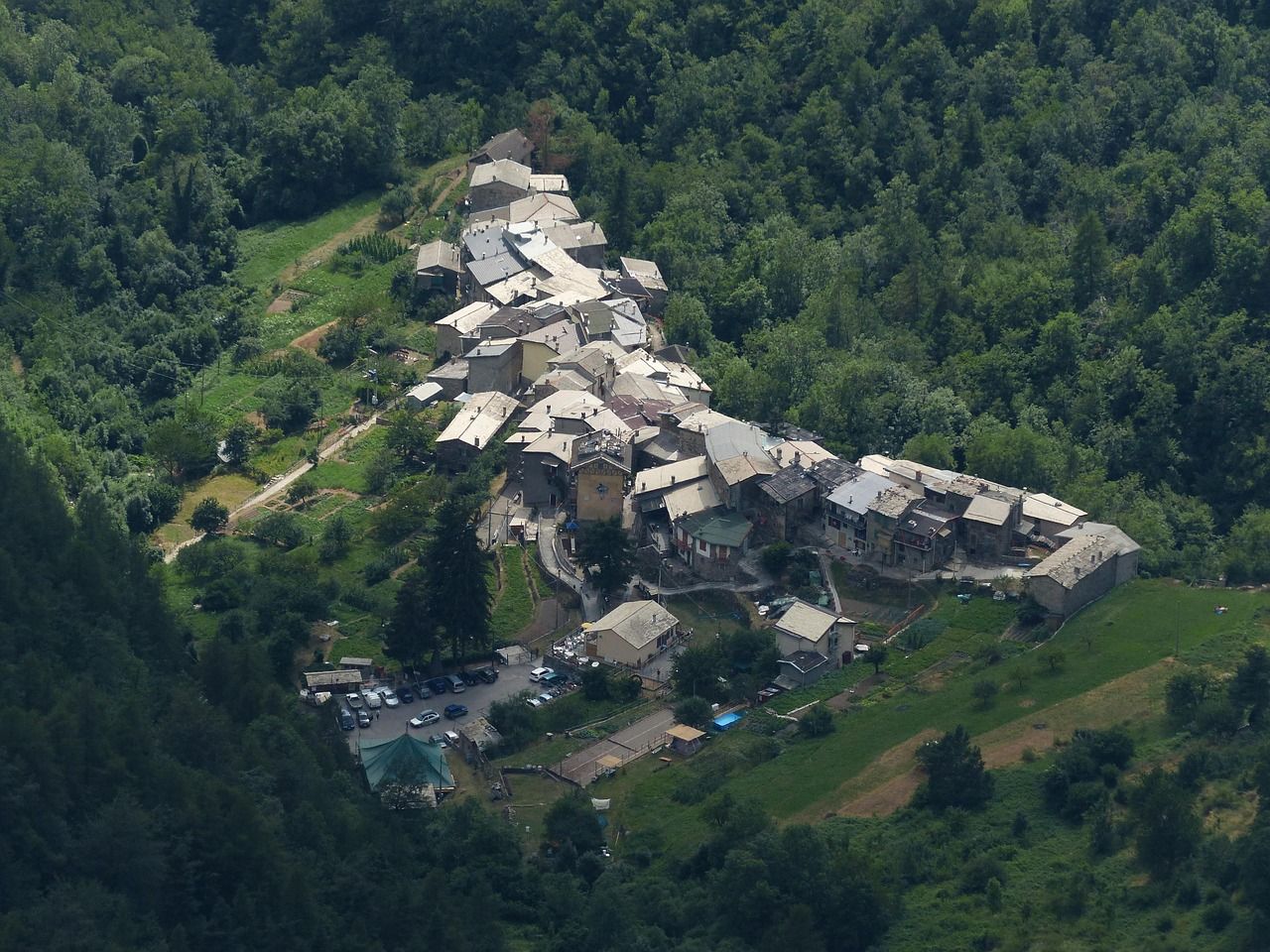
Triora
Photo by Hans on Pixabay
The Unbeaten Path
Italy · Southern EuropeUnbeaten Score: 8/10State Dept Level 2

Triora

In Liguria's shadowed valleys, Italy's 'Salem' keeps its secrets among crumbling stone and whispered witchcraft.

Difficulty

Moderate(6/10)

Budget/Day (from)

$55 USD

Best Age Range

30-65

English

Basic

Overview

Perched at 780 meters in the Ligurian Alps, Triora earns its nickname 'Il Paese delle Streghe' (The Village of Witches) through actual history rather than manufactured mystique. In 1588, the village became the site of Italy's most significant witch trials when twenty women were imprisoned in the Cabotina building—still standing today on Via Castello—and tortured under accusations of causing famine through sorcery. This grim past permeates the medieval alleyways, but what makes Triora genuinely compelling is how few visitors navigate its steep, weathered stone passages, leaving you to discover the Regional Ethnographic and Witchcraft Museum or the crumbling Church of San Bernardino with only the occasional local shepherd for company. The drive alone from the coast—thirty kilometers of hairpin turns through the Argentina Valley—filters out casual tourists. Once you arrive, the village reveals itself slowly: black slate roofs cascade down the mountainside, Gothic doorways frame views of chestnut forests that turn copper each October, and the Collegiata dell'Assunta church sits at the summit with its faded frescoes and silence so complete you can hear your own breathing echo off medieval stone. Walk to the ruined castle above town at dusk, and you'll understand why locals believed supernatural forces gathered here—the isolation is absolute, the wind carries strange whistles through abandoned houses, and the Maritime Alps stretch endlessly toward peaks that hold snow into June. Triora's restaurants serve pattona (chestnut flour polenta) and funghi porcini harvested from the surrounding forests rather than tourist-menu carbonara, and the two elderly women who run Pasticceria Serafini will sell you canestrelli biscuits from the same recipes their grandmothers used. You won't find tour buses, souvenir shops hawking witch kitsch (despite the theme), or English menus. What you will find is a village that has transformed its darkest chapter into quiet remembrance rather than exploitation, where genuine medieval atmosphere survives because almost nobody makes the journey up the mountain to experience it.

Why It's Unbeaten

Triora sits in the shadow of Portofino and the glitzier Italian Riviera beach towns, so most tourists never venture inland to find it. While crowds flock to the postcard-perfect harbours of the coast, this hilltop village in Liguria's Arroscia Valley stays quiet and genuinely untouched. It's the kind of place where you'll outnumber tourists 10-to-1 with locals, and that's precisely why it matters. The mainstream travel circuit treats the Riviera as a linear coastal experience—train from town to town—but Triora rewards those willing to climb 45 minutes uphill to discover something with real character.

US State DepartmentLevel 2 — Exercise Increased Caution

Exercise increased caution in Italy due to petty crime such as pickpocketing in crowded areas and tourist hotspots.

Advisory based on knowledge as of 2025. Always check travel.state.gov for the most current information.

Who Is This Trip For?

Recommended age range: 30-65

Best For

Ages 30-65

History enthusiasts

Photography lovers

Off-the-beaten-path seekers

Dark tourism curious

Couples seeking atmosphere

Not Ideal For

May be challenging outside ages 30-65

Families with young children

Travellers with mobility issues

Those seeking nightlife

Visitors without a car

Getting There

The nearest airport is Nice Côte d'Azur (about 100 kilometers southwest), which has excellent European connections. From there, rent a car—public transport to Triora exists but requires patience and two or three transfers. The drive from Nice takes roughly 2.5 hours through winding mountain roads; it's scenic and worth doing in daylight. Alternatively, you can fly into Genoa (150 kilometers north), take a train to Imperia, then a bus or taxi up the valley. The final leg from Imperia to Triora is about 45 minutes by car through the Valle Argentina. If you're coming from France, the approach through the Col de Tende mountain pass is genuinely beautiful, though it adds time. Train travel from Nice to Imperia is reliable but slow (around 2.5 hours), and buses from Imperia run a few times daily. The reality: a car gives you freedom to explore the surrounding valleys and makes the journey feel less like transit and more like arrival. Expect narrow, hairpin roads—nothing treacherous, but they demand respect and attention.

Budget Guide

Local CurrencyEuro (EUR)· 1 USD = 0.85 EUR(Thu, 16 Ap)💳 Italy is increasingly card-friendly, but carry some cash for small villages and rural areas like Triora. ATMs are available in town centers. Contactless payments are widely accepted at restaurants and shops. Tipping is not mandatory but rounding up or leaving 5-10% is appreciated for good service.

Budget

$55USD / day
47 EUR

Budget accommodations (€30-40), simple meals at local trattorias (€12-18), local transport, and free attractions like village exploration

Midrange

$120USD / day
102 EUR

Mid-range hotel or guesthouse (€60-80), restaurant dinners (€25-35), local wine tastings, hiking excursions, and regional food experiences

Splurge

$220USD / day
186 EUR

Upscale boutique hotels (€100-150), fine dining (€40-60+ per meal), private tours, wine estate visits, spa services, and exclusive regional experiences

* USD amounts are approximate. Exchange rates refresh hourly via Frankfurter.

Visa & Entry

US citizens traveling to Italy no longer enjoy visa-free entry as of 2025. All American travelers must obtain an ETIAS (European Travel Information and Authorization System) authorization before arrival. This is not a traditional visa but rather an electronic travel authorization valid for four years across all Schengen Area countries, including Italy. The authorization allows stays of up to 90 days within any 180-day period. UK and EU citizens have different requirements depending on their nationality. UK citizens, post-Brexit, must also obtain ETIAS authorization to visit Italy and other Schengen countries, following the same 90-day/180-day rule as US citizens. EU citizens holding a valid national ID card or passport can travel to Italy visa-free and stay indefinitely as EU residents, though non-EU nationals residing in the EU may need to verify their specific status. For all travelers, a passport valid for at least three months beyond your intended return date is mandatory. US citizens should apply for ETIAS well in advance of travel, though most approvals are processed within minutes to days. It is advisable to complete the application at least two weeks before departure to allow time for any administrative review if required.

US

ETIAS Authorization Required
Max stay:90 days within 180-day periodProcessing:Minutes to days (apply 2+ weeks before travel)Fee:€7 USD equivalent (approximately $7-8 USD)

Valid for 4 years across all Schengen countries. Passport must be valid for 3+ months beyond return date.

Apply:European Travel Information and Authorization System (ETIAS)

UK

ETIAS Authorization Required
Max stay:90 days within 180-day periodProcessing:Minutes to days (apply 2+ weeks before travel)Fee:€7 USD equivalent (approximately $7-8 USD)

Post-Brexit requirement. Valid for 4 years across all Schengen countries. Passport must be valid for 3+ months beyond return date.

Apply:European Travel Information and Authorization System (ETIAS)

EU

Visa-free (EU Citizens)
Max stay:Unlimited (for EU nationals)

EU citizens with valid national ID or passport can travel visa-free. Non-EU nationals with EU residency should verify their specific status with their member state.

Apply:Schengen Area Freedom of Movement

Visa requirements are based on publicly available information and may have changed. Always confirm with the official embassy or consulate before travelling.

Where to Stay

Search for accommodation

The properties below are curated suggestions. You can also search directly on a booking platform.

Search Booking.comSearch Airbnb

Note on contact information: Where available, contact details are sourced from publicly available records and may be out of date.

Locanda del Sfrens$50-70/night
Guesthouse

A small, unpretentious family-run place in the centre of the village with creaking wooden stairs, minimal but genuine hospitality, and a breakfast that includes local bread and honey. The owners have lived here their whole lives and can point you toward things no guidebook mentions. It's basic, authentic, and the kind of place where you actually meet other travellers.

Rooms Triora$65-95/night
B&B

Slightly more polished than Locanda del Sfrens but still intimate. Exposed stone walls, warm lighting, and genuine knowledge of the village's history. The owners speak English and have curated a small library of books about the witch trials and local culture. Worth the extra euros for a touch more comfort without losing character.

Contact details unavailable — try searching online or a booking site.

Search "Rooms Triora" on Booking.com →
Agriturismo Prato di Brusco$75-110/night
Agriturismo (working farm stay)

About 3 kilometers outside Triora, in the surrounding valleys. This is how you experience mountain Liguria: stay in a converted farmhouse, eat what they grow and produce, meet the family who runs it. Dinner (if available) is typically 4-5 courses of local food. Peaceful, educational, and genuinely memorable—though isolation isn't for everyone.

AddressLocalità Brusco, Triora, Italy

Guesthouse Triora Centro$85-130/night
Boutique guesthouse

The most comfortable option without being resort-like. Modern bathrooms, original stone architecture preserved, and a small communal kitchen where you can cook or prepare a picnic. Located on the main square, so you're integrated into village life while having a proper retreat.

Contact details unavailable — try searching online or a booking site.

Search "Guesthouse Triora Centro" on Booking.com →

What to Do

Museo Etnografico e Della Stregoneria (Museum of Ethnography and Witchcraft)

This small, haunting museum documents the 1587 witch trials with original documents, illustrations, and accounts. It's not sensationalized—instead it's sobering and thought-provoking, showing how hysteria and fear took root in a mountain village. The museum is run with genuine scholarly care and offers context about European witch hunts that's rarely explained this clearly. Plan 1.5-2 hours to read properly.

Walk the Medieval Village Centre

Forget guidebooks: wander the narrow caruggi (alleyways) without a map. Stop at the Church of the Assumption (16th century, with unexpected interior richness), climb the stairs that lead nowhere interesting but offer sudden views, sit in Piazza Castello and watch village life. This is the texture of mountain Liguria that doesn't photograph well but feels profound.

Punta Gracile Hike

A moderate 4-5 hour round-trip hike from Triora to a peak (1,264 meters) with views across the Ligurian Alps into France. The trail is marked but not crowded. You'll encounter maybe 5 other people all day. Bring water and start early; the landscape is spare, the silence absolute, and the sense of remoteness real.

Fonte Bianchetta Spring Walk

A gentler 2-hour outing to a natural spring in the hillside above the village. The water is cold and clear, the path shaded, and at the spring itself there's often a kind of stillness that feels almost sacred. Bring a bottle and fill it; locals credit the water with health properties. It's a small thing but captures the landscape's quiet character.

Visit Castelvittorio (nearby village)

Drive or hike 40 minutes to this even tinier village perched on an adjacent peak. There's barely any tourist infrastructure—maybe one small bar, a church, sheep. This is where you understand the isolation and self-sufficiency of mountain villages. The peace is almost unsettling if you come from cities.

Talk to Locals About the Trials

This is intangible but vital. Buy a coffee, ask the barista or shop owner about the witch trials, and listen. You'll hear family stories, local interpretations, and a connection to history that's genuinely lived rather than read. Triora's weight comes not from tourist packaging but from collective memory.

Where to Eat

Food in Triora is mountain Liguria food—not the flashy pesto-and-seafood coast, but vegetables, cheese, preserved meats, and bread. You'll find trofie (hand-rolled pasta), mushroom dishes (Triora sits in truffle country), goat cheese, and cured meats that come from surrounding farms. The cooking is seasonal, obvious, and designed by people who've lived here for generations. There are no food tours, no fusion, no plating theatre—just food that tastes like the place. Eat what's on the menu that day; asking "what's good?" is the only review system that matters.

Trattoria del Podestà

The village's main restaurant, family-run since forever. The trofie with mushrooms is definitive—earthy, simple, made from August mushrooms they've dried. The goat cheese is local and pungent. Order wine from the Ligurian hills; it's not famous but it's honest. Dinner costs roughly €25-35 per person without wine.

Osteria del Basso

Smaller, quieter, run by an older couple who cook like they're feeding family. The pasta courses are made fresh that morning. Ask about corzetti (a Ligurian coin-shaped pasta) if they're making it. It's the kind of place where your table might be the only occupied table, which somehow makes the meal feel more intimate and real.

Panetteria Pastry Shop (no fixed name—just ask for 'the bakery')

For breakfast or lunch, buy fresh focaccia (Ligurian style, lighter and less oily than versions elsewhere), farinata (chickpea flour flatbread), and local cheese. Eat it on a bench overlooking the valley. This costs €3-6 and tastes like Triora's actual daily life.

Language & Culture

Official Language

Italian

English Spoken

Basic

Simple tourist phrases only in hotels and main attractions — most locals speak no English

📱 Translation app strongly recommended

Cultural Tips

Italians greet with 'buongiorno' (morning) or 'buonasera' (afternoon/evening) — always acknowledge shopkeepers when entering. Triora's residents are proud of their unique witchcraft history but approach it seriously as cultural heritage, not as kitsch entertainment. Long lunches are sacred, and many establishments close from 1-4pm; plan your day around this riposo period.

Useful Phrases

EnglishLocalPronunciation
Hello
Buongiorno
bwon-JOR-no
Thank you
Grazie
GRAH-tsee-eh
How much?
Quanto costa?
KWAN-toh KOS-tah
Where is...?
Dov'è...?
doh-VEH
Excuse me
Mi scusi
mee SKOO-zee

Safety & Health

Triora is an exceptionally safe destination with virtually no crime concerns for tourists. This sleepy mountain village of fewer than 400 residents maintains the quiet, trusting atmosphere typical of rural Italy. The primary safety considerations are practical rather than criminal: the narrow, steep cobblestone streets can be slippery when wet, and some paths around the ruins require sturdy footwear. Cell phone coverage can be spotty in the surrounding valleys. No special vaccinations are required for Italy beyond routine immunizations. The nearest hospital is in San Remo (about 40 minutes by car), and there's a small medical clinic in the valley town of Molini di Triora. For emergencies, dial 118 for ambulance services. Pharmacies in nearby towns carry standard medications. Bring any prescription medications you need, along with basic first aid supplies, as Triora itself has minimal medical resources. The mountain terrain presents some natural hazards — summer thunderstorms can develop quickly, and winter brings occasional snow and ice. Hikers should inform their accommodation of their plans and carry water, as the Mediterranean climate can be deceptively hot in summer. Tap water throughout Italy is safe to drink.

Best Time to Visit

May-June and September-October are ideal—the weather is stable and cool (15-22°C), wildflowers bloom, and hiking conditions are perfect without summer heat. July-August is warmer but brings more hikers and slight crowding (which here means maybe 50 extra visitors per week). Winter is austere and beautiful but can be cold and occasionally snowy, closing some outdoor activities.

May-June

Spring wildflowers, cool temperatures perfect for hiking, village life is active without being crowded, the surrounding valleys are lush and green.

Occasional rain, some restaurants/shops may have limited hours as they ramp up for summer, accommodation fills quickly on weekends.

July-August

Reliably warm and dry, all facilities open and staffed, longest daylight for hiking, most vibrant village atmosphere.

Noticeably more tourists (though still a fraction of coastal crowds), higher accommodation prices, some of the village's austere character softened by activity.

September-October

The sweet spot—warm but not hot, summer crowds gone, mushroom and truffle season arrives (affects menus positively), clear autumn light, hiking conditions excellent.

Weather becomes less predictable by late October, some restaurants begin reducing hours, days shorten noticeably by October.

Honest Caveats

Triora is not for everyone, and I'll be direct about it. There's minimal infrastructure for tourism—limited restaurant hours, shops that close 1-4pm for lunch and don't reopen, and no activity designed specifically for visitors. If you need constant entertainment or restaurant options that stay open until 11pm, you'll be frustrated. The witch trial history, while fascinating, does cast a shadow; some find that darkness compelling, others find it depressing. The village is genuinely quiet—which is restorative for some and unsettling for others. And it's cold in winter; summers are pleasant but can be crowded (relatively) with hiking tourists. Also: the roads to get there are narrow and require confident driving. Internet can be spotty. There's no nightlife. If you're traveling with teenagers expecting entertainment, they'll be bored within an hour. And logistically, getting here without a car is genuinely difficult, which means you need to either rent one or accept 3+ hours of public transit. This is a place you visit to slow down and think, not to 'do things.' That's its appeal and its limitation in equal measure.

Difficulty Breakdown

Overall

6/10

Moderate

Language Barrieri

6/10

Moderate

Logisticsi

7/10

Challenging

Physical Demandi

5/10

Moderate

Infrastructurei

5/10

Moderate

What This Means

Triora rewards the self-reliant traveller willing to navigate some logistical challenges. The lack of public transport, limited English, and remote location require advance planning and flexibility. However, the village itself is compact and safe, making it accessible once you arrive. This is an ideal destination for those comfortable driving mountain roads and embracing slower-paced, authentic Italian rural life.

Nearby Destinations Worth Combining

40 minutes by car

San Remo
Why combine? ▾

Belle époque seaside glamour with a famous casino, Art Nouveau villas, and the colourful La Pigna old town

35 minutes by car

Dolceacqua
Why combine? ▾

A photogenic medieval village with a ruined Doria castle, famously painted by Monet, and excellent Rossese wine

30 minutes by car

Apricale
Why combine? ▾

One of Italy's 'most beautiful villages' perched dramatically on a hillside with art installations throughout its stone lanes

1 hour by car

Cervo
Why combine? ▾

A pristine Ligurian coastal village with a baroque church overlooking the sea and an international chamber music festival

Click any destination to see why it pairs well with Triora.

Location

Map data © OpenStreetMap contributors

medievalhistoryvillagesculturearchitecture
← Back to all destinations