Travel Restrictions in EffectClick for details ▾

Restrictions are in effect for this destination. Please check with the U.S. Department of State for full details before travelling.

Restriction information is based on publicly available regulations and may not reflect the most recent changes. Always verify with the US Treasury / OFAC and US State Department before making any plans.

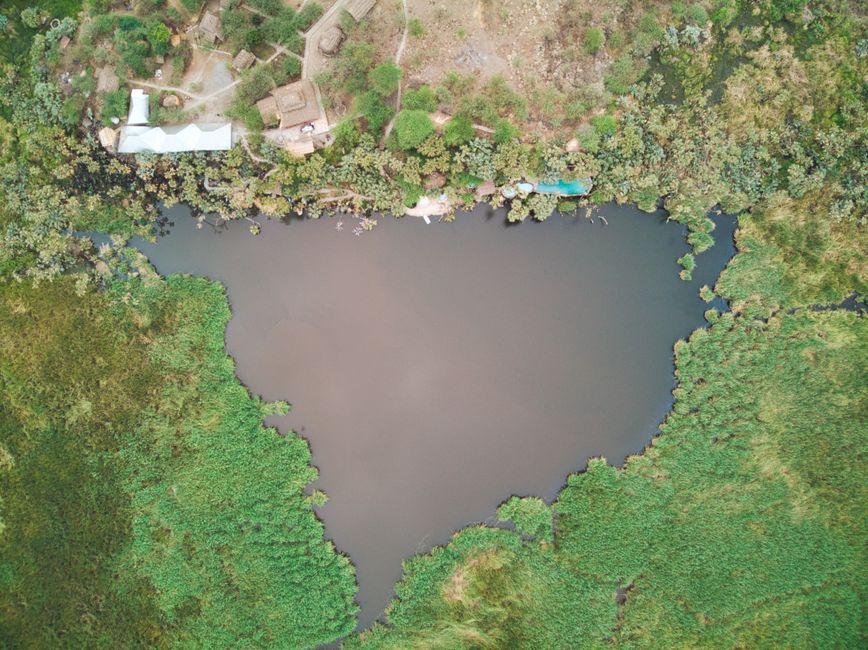
Aerial drone shot of a tranquil lake surrounded by greenery in Afar, Ethiopia.
Photo by Daggy J Ali on Pexels
The Unbeaten Path
Ethiopia · Sub-Saharan AfricaUnbeaten Score: 8/10State Dept Level 3🏛 UNESCO World Heritage

Tiya

Thirty-six mysterious stelae carved with swords stand in a field where farmers still plow around Ethiopia's unexplained stone army.

Difficulty

Challenging(7/10)

Budget/Day (from)

$45 USD

Best Age Range

25-60

English

Basic

Overview

An hour south of Addis Ababa, thirty-six mysterious stone pillars stand in a grassy field, carved with swords and abstract symbols that archaeologists still can't fully explain. Tiya is one of those UNESCO sites that somehow stays off most itineraries—maybe because it's not dramatic in the Instagram sense, maybe because Ethiopia's northern circuit gets all the glory. But if you're the kind of traveller who gets a thrill from standing in front of something genuinely enigmatic, these megalithic stelae will stay with you long after you've left. The stones date somewhere between the 10th and 14th centuries, marking what's believed to be an ancient burial site. Some are engraved with mysterious designs—swords, plant-like shapes, circular patterns that feel almost coded. No one knows exactly who carved them or what all the symbols mean, which is precisely what makes wandering among them so compelling. Unlike the crowded historical sites elsewhere, you'll likely have the field mostly to yourself, with just the wind, the highland air, and maybe a local guide who knows the theories but admits the stones keep their secrets. The setting itself is quietly beautiful—rolling green countryside dotted with eucalyptus trees and the occasional shepherd passing through. There's a small museum on-site that contextualizes what you're seeing, though honestly, the real experience is standing among the stones themselves, running your fingers over the carvings, and feeling the weight of all that unresolved history. Most visitors combine Tiya with other stops on the southern route toward the Rift Valley lakes, but it deserves more than a quick photo stop. Give it an hour. Sit with the mystery a little. You'll leave feeling like you've touched something ancient that tourism hasn't yet flattened into easy answers.

Why It's Unbeaten

Tiya sits in the shadow of Ethiopia's more famous archaeological sites—Axum and Lalibela dominate the tourist circuit, leaving this UNESCO World Heritage Site remarkably quiet. Most visitors following guidebooks head north to the dramatic rock-hewn churches or east to the ancient kingdom's heartland, completely overlooking the Lower Awash Valley where Tiya's mysterious stelae stand. What's odd is that Tiya offers something those sites don't: a haunting, understudied cemetery filled with monolithic pillars whose true purpose remains debated by archaeologists. This ambiguity—combined with its remote location in the Southern Nations region—means you'll likely have the site almost entirely to yourself, which is rare in Ethiopian tourism.

US State DepartmentLevel 3 — Reconsider Travel

The US State Department maintains a Level 3 'Reconsider Travel' advisory for Ethiopia, with Level 4 'Do Not Travel' warnings for five specific regions due to ongoing safety risks.

Advisory based on knowledge as of 2026. Always check travel.state.gov for the most current information.

Who Is This Trip For?

Recommended age range: 25-60

Best For

Ages 25-60

Archaeology enthusiasts

History buffs

Intrepid travellers

UNESCO site collectors

Not Ideal For

May be challenging outside ages 25-60

First-time international travellers

Families with young children

Those seeking comfortable tourism infrastructure

Risk-averse travellers

Getting There

Tiya is roughly 80km south of Addis Ababa, which is where most international visitors arrive. From Addis, take a minibus from the main transport hub toward Butajira or Adama (3-4 hours, around 150-200 birr). The road is paved but can be slow depending on traffic. Ask the driver to drop you at Tiya town; from there, you'll need to arrange a private minivan or 4x4 for the final 15km to the archaeological site itself—expect to pay 300-500 birr for a driver willing to wait. Alternatively, book through a local guide in Addis (easier than DIY), which typically costs $80-120 for a full day including transport, guide, and site entry.

Budget Guide

Local CurrencyEthiopian Birr (ETB)· 1 USD = 155.95 ETB(Thu, 16 Ap)💳 Cash (ETB) is essential as many establishments do not accept cards. ATMs are available in Addis Ababa and major towns. Credit cards accepted at upscale hotels and restaurants. Carry small denominations for markets and rural areas.

Budget

$45USD / day
7,018 ETB

Budget accommodation in local guesthouses ($10-15/night), street food and local eateries ($8-12/day), local transport ($3-5/day), and free or low-cost attractions.

Midrange

$90USD / day
14,036 ETB

Mid-range hotel or good guesthouse ($30-50/night), meals at casual restaurants ($15-20/day), guided tours and activities ($20-30/day), and local transport.

Splurge

$180USD / day
28,072 ETB

High-end hotels in Addis Ababa or resort lodges ($80-120/night), fine dining and international restaurants ($30-50/day), premium guided tours and trekking experiences ($40-60/day), and private transport.

* USD amounts are approximate. Exchange rates refresh hourly via Frankfurter.

Visa & Entry

Most international travelers to Ethiopia require a visa, which can be obtained either through the Ethiopian e-Visa portal or upon arrival. US citizens, UK citizens, and most EU nationals are eligible for an e-Visa, which is the recommended method for a streamlined application process. The e-Visa typically takes 10 business days for approval and is valid for 90 days with a single entry, allowing stays of up to 30 days. Alternatively, visitors can obtain a visa on arrival at Addis Ababa Bole International Airport, though this may involve longer processing times. It is advisable to apply online in advance to avoid delays at the airport.

US

e-Visa
Max stay:30 daysProcessing:10 business days

e-Visa valid for 90 days, single entry. Visa on arrival also available at airport.

Apply:Ethiopian e-Visa Portal

UK

e-Visa
Max stay:30 daysProcessing:10 business days

e-Visa valid for 90 days, single entry. Visa on arrival also available at airport.

Apply:Ethiopian e-Visa Portal

EU

e-Visa
Max stay:30 daysProcessing:10 business days

e-Visa valid for 90 days, single entry. Visa on arrival also available at airport.

Apply:Ethiopian e-Visa Portal

Visa requirements are based on publicly available information and may have changed. Always confirm with the official embassy or consulate before travelling.

Where to Stay

Search for accommodation

The properties below are curated suggestions. You can also search directly on a booking platform.

Search Booking.comSearch Airbnb

Note on contact information: Where available, contact details are sourced from publicly available records and may be out of date.

Addis Ababa (as a base)$60-120/night
Boutique hotel / Mid-range

Most visitors stay in Addis (80km away) rather than Tiya itself, where accommodation is minimal. Hotels like Taitu or Harmony offer comfortable mid-range options with good transport links. You can do Tiya as a long day trip from the capital, which most travelers choose.

Contact details unavailable — try searching online or a booking site.

Search "Addis Ababa (as a base)" on Booking.com →
Local guesthouses in Butajira$15-25/night
Basic guesthouse

If you want to base yourself closer, Butajira (the nearest town with real services) has simple guesthouses. Don't expect luxury—these are functional stops for truck drivers and local travelers. The trade-off is proximity to Tiya and a genuine sense of local life.

Eco-lodges near Awash National Park$50-80/night
Mid-range eco-lodge

The Lower Awash region has a few scattered eco-lodges that cater to wildlife travelers. These offer more comfort than town guesthouses and are positioned between Tiya and Awash National Park, allowing you to combine both experiences in one trip.

What to Do

Tiya Archaeological Site (UNESCO World Heritage)

Walk among roughly 36 monolithic stelae, some carved with symbolic patterns—daggers, plows, lines—whose meaning remains contested by scholars. The site dates to between 1000-1500 CE and is genuinely enigmatic; bring a guide from town who can share local interpretations and point out the subtle carvings. The quiet here is profound.

Ethiopian Coffee Ceremony (local experience)

Arrange this through your guide or accommodation—watch coffee beans roasted over coals, ground by hand, and brewed in a traditional jebena pot while you sit on a low bench and drink. It's a ritual you'll see everywhere in Ethiopia, but experiencing it in a small Tiya community feels more authentic than in Addis tourist cafes.

Lower Awash Valley hiking

The landscape around Tiya—semi-arid grassland with scattered acacia—is worth exploring on foot if you have time. Hire a local guide to walk along the Awash River valley; you'll see baboons, Ethiopian wolves (if lucky), and get a sense of why ancient peoples settled this region.

Visit nearby Adama town

If you're already in the region, Adama (1.5 hours east) is a larger trading hub with markets and a different energy. It's not a tourist draw, but it shows you contemporary Ethiopian town life away from the capital.

Chat with local guides and elders

Tiya's strength is human connection. Spend time with your guide asking about oral histories, local legends about the stelae, and contemporary life. These conversations often reveal more than any sign or guidebook.

Where to Eat

Food in Tiya town and surrounding areas is simple, meat-and-carb based—injera with wot (stew), shiro (chickpea paste), and occasional raw meat dishes. Restaurants are basic shacks with minimal menus; what you eat depends largely on what was cooked that day. If you're based in Addis or a larger town, eat proper meals there; in Tiya, expect filling but unremarkable food. Coffee and chat (the leaf, not conversation) are social anchors here, not fine dining destinations.

Local edir (community gathering) restaurants in Butajira

These informal spots serve authentic wot and injera to locals—no tourists, no tourist prices. Ask your guide or driver; they'll know where construction workers and traders eat lunch. The experience is more valuable than the food itself.

Addis Ababa restaurants before/after day trip

If doing Tiya as a day trip from the capital, eat well in Addis at places like Habesha or Makush Art Gallery—excellent Ethiopian cuisine with actual ambiance. Save yourself the disappointment of expecting restaurant standards in Tiya.

Language & Culture

Official Language

Amharic

English Spoken

Basic

Simple tourist phrases only in hotels and main attractions — most locals speak no English

📱 Translation app strongly recommended

Cultural Tips

Ethiopian culture emphasizes respect for elders and hospitality. When visiting the Tiya stelae, dress modestly covering shoulders and knees—this is both culturally appropriate and sun-smart. The traditional coffee ceremony is an important social ritual; accepting an invitation is a sign of respect. Always ask permission before photographing people, and be prepared for requests for payment.

Useful Phrases

EnglishLocalPronunciation
Hello
ሰላም (Selam)
seh-LAHM
Thank you
አመሰግናለሁ (Ameseginalehu)
ah-meh-seh-gih-NAH-leh-hoo
How much?
ስንት ነው? (Sint new?)
sinnt NEW
Where is...?
...የት ነው? (...yet new?)
...yet NEW
Excuse me
ይቅርታ (Yikirta)
yih-kir-TAH

Safety & Health

Ethiopia currently has a Level 3 (Reconsider Travel) to Level 4 (Do Not Travel) advisory from the US State Department due to sporadic violent conflict, civil unrest, and crime. While the Tiya area in the Gurage Zone has historically been more stable than conflict-affected regions like Tigray, Amhara, and Oromia, the security situation can change rapidly. The US Embassy has limited ability to provide consular services outside Addis Ababa. Always check current conditions before travel, avoid demonstrations, and maintain a low profile. Health precautions are essential. Malaria prophylaxis is recommended for areas below 2,000 meters (Tiya sits around 1,900m, so assess risk with your doctor). Yellow fever vaccination is required if arriving from endemic countries. Ensure routine vaccinations are current, and consider Hepatitis A/B, typhoid, and rabies vaccines. Drink only bottled or purified water—avoid ice and raw vegetables washed in tap water. Medical facilities outside Addis Ababa are extremely limited. The nearest hospitals are in Butajira or back in the capital. Comprehensive travel insurance with medical evacuation coverage is absolutely essential. Bring a well-stocked first aid kit, any prescription medications, and oral rehydration salts. Altitude in the Ethiopian highlands can affect some travellers—Addis Ababa sits at 2,400m.

Best Time to Visit

October to February is the ideal window: cool, dry mornings and minimal rain. The Awash Valley can be scorching March–May, and the rainy season (June–September) makes roads hazardous and visibility poor.

October to February (Dry Season)

Clear skies, cool mornings (still warm by midday), roads passable, best for hiking and photography. This is peak time but still very quiet.

Dust in the valley can be thick; bring water and a hat.

March to May (Hot/Pre-Rainy)

Still dry and accessible, though increasingly hot. Fewer tourists than Oct–Feb.

Daytime heat in the Awash Valley can exceed 35°C; physically demanding. Roads start deteriorating late May.

June to September (Rainy Season)

Landscape is green, temperatures slightly lower, fewer tourists.

Roads become difficult or impassable; transport is unreliable. Rain can obscure archaeological details. Malaria risk rises; bring prophylaxis.

Honest Caveats

Be honest: Tiya is remote and underdeveloped in tourism infrastructure. Roads to the site are rough, accommodation is spartan, and English-speaking guides are not guaranteed—you'll likely need to book through a tour operator in Addis rather than wing it solo. The archaeological site itself, while genuinely fascinating, won't blow you away visually if you're expecting dramatic monuments like Lalibela's churches. You're paying for quietness and historical intrigue, not spectacular views. The journey (especially in rainy season) can be uncomfortable, and the heat in the Awash Valley is intense. Also, tourist information on the ground is minimal—you really do need to arrange things in advance or through a guide.

Difficulty Breakdown

Overall

7/10

Challenging

Language Barrieri

7/10

Challenging

Logisticsi

7/10

Challenging

Physical Demandi

3/10

Easy

Infrastructurei

4/10

Easy

What This Means

Tiya presents moderate-to-high travel difficulty primarily due to logistical challenges rather than physical demands. The UNESCO site itself is easy to explore, but getting there independently, finding knowledgeable guides, and managing in an area with minimal tourist infrastructure requires experienced travel skills. The current security situation in Ethiopia adds another layer of complexity requiring careful planning and flexibility.

Nearby Destinations Worth Combining

45 minutes by car

Melka Kunture
Why combine? ▾

Significant prehistoric archaeological site with Stone Age tool findings dating back 1.7 million years

1.5 hours by car

Addis Ababa
Why combine? ▾

Ethiopia's vibrant capital with the National Museum (home to 'Lucy'), Merkato market, and modern amenities

30 minutes by car

Adadi Mariam
Why combine? ▾

Ethiopia's southernmost rock-hewn church, carved into volcanic rock in the 12th-13th century

Click any destination to see why it pairs well with Tiya.

Location

Map data © OpenStreetMap contributors

ancient ruinshistoryarchaeologyculturenature
← Back to all destinations