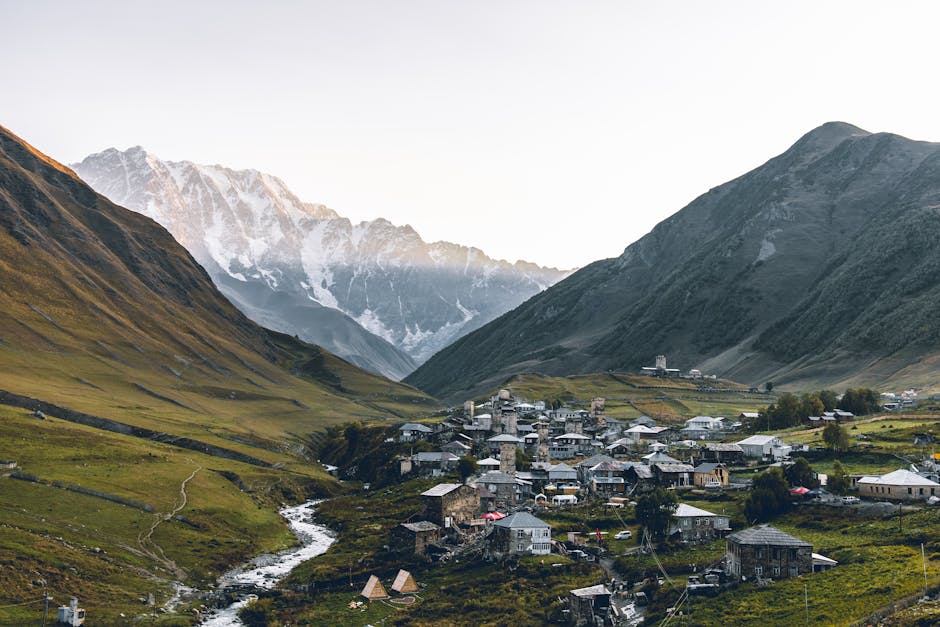
Svaneti feels like a place that shouldn't exist anymore—a high mountain refuge where medieval defensive towers still pierce the skyline of active villages, where people speak their own language (Svan, not Georgian), and where isolation wasn't broken until a road finally connected the region to the rest of Georgia in the 1930s.
Upper Svaneti, wedged between the Caucasus and Svaneti mountain ranges, is home to communities like Ushguli and Chazhashi where these stone towers—some over 800 years old—weren't built for show. They were survival architecture: family fortresses against centuries of invaders, with three to five floors, walls thick enough to outlast sieges, and a design so integral to Svan identity that nearly every household built one. The village of Chazhashi alone has more than 200 of them, clustered on mountain slopes with glaciated peaks like Shkhara and the dramatically jagged Ushba looming overhead.
What makes Svaneti feel unbeaten isn't that tourists don't come—they do, especially to the main hub of Mestia—but that the place absorbs visitors without losing itself. Svan culture runs deep here. People still live in and around these towers, tend livestock on impossibly steep pastures, and celebrate village feasts like Kvirikoba in late July with supra tables groaning under khachapuri and mountains of grilled meat. The towers aren't museum pieces; they're part of the living landscape, standing watch over stone houses with slate roofs and gardens carved into hillsides. You'll round a bend on a trail and find yourself staring at a 12th-century church with frescoes inside, or a cluster of towers silhouetted against a snowfield, and realize this isn't reconstructed or preserved in amber—it's simply continuous.
Travellers who make it here feel lucky because Svaneti delivers that rare combination: jaw-dropping natural beauty (some of Europe's highest peaks are here), genuine cultural distinctiveness, and the sense that you've reached somewhere remote enough to still live by its own rhythms. The hiking is extraordinary—routes between villages, up to glacial lakes, through alpine meadows—and the mountain light at dawn or dusk turns those stone towers into something almost mythical. It's not easy travel: roads are rough, infrastructure is basic outside Mestia, and weather in the high country is fickle. But that's exactly why it remains what it is.
Photo by Tomáš Malík on Pexels
Why it's Unbeaten
Out of the main current, in the right way.
Svaneti is geographically isolated in the high Caucasus, which paradoxically preserves it but also keeps it off most mainstream tourist radars. While Georgia itself has become trendy—Tbilisi especially—most visitors stick to the capital, wine regions, and the Black Sea coast. They miss Svaneti entirely because it requires genuine effort to reach: it's not on a convenient highway, there's no direct flight, and it demands several hours of marshrutka or hired car from the lowlands. The towers and medieval villages are extraordinary, but they're not Instagram-famous in the way that, say, Swiss alpine villages are. You won't find tour buses here, partly because the infrastructure can't support them and partly because the Svan people have resisted turning their homeland into a theme park.
The main event
What you'll actually do in and around Svaneti
01
Walk the flagged path from Mestia to Ushguli
A 2–3 day trek passing through multiple villages with over 200 medieval tower-houses still standing. The path is marked, passes through hamlets where people live much as they did centuries ago, and culminates at Ushguli (the highest inhabited settlement in the Caucasus at roughly 2,200m). This is the hike that defines Svaneti—bring detailed maps from Mestia tourist information and allow time to stop in villages and speak with residents.
02
Visit Chazhashi village and the Tower of Love
Chazhashi, part of Ushguli community, preserves the densest concentration of towers in the region—a UNESCO-protected medieval townscape. The Tower of Love (Shuris Gvretili) between Mestia and Ushguli is a famous landmark with its own legend. These towers served as both homes and defence posts during centuries of raiding; their architecture is uniquely Svan, with thick stone walls and narrow windows designed to withstand siege.
03
Climb Mount Ushba or Mount Shkhara
These are serious alpine peaks (Ushba, 4,694m; Shkhara, 5,193m) visible from most villages. They require mountaineering experience, crampons, and guides. Hire a guide through your guesthouse. The views of snow-covered peaks and the Caucasus spine are unforgettable, but don't attempt these without preparation.
04
Hike Enguri Canyon
A day trip north of Jvari and Totani village, this canyon offers dramatic gorge scenery and (seasonally) swimming when water levels from the dam are right. It's less touristy than the Mestia–Ushguli route and rewards spontaneity.
05
Attend Kvirikoba festival (28 July) in Kala
A traditional religious feast that draws locals and visiting Georgians. If you can coordinate your trip for late July, you'll witness communal feasting, traditional dress, and genuine Svan hospitality. Accommodation becomes scarce, so book ahead, but the experience is authentic and safe.
06
Explore local churches and religious sites
Svaneti has small, ancient churches integrated into village life. Many lack formal visiting hours—ask locals. Churches often sit above villages and offer panoramic views. Respect prayer times and remove shoes where requested.
Taste of Svaneti
Where to eat
Svaneti food is Mingrelian—spicier and richer than lowland Georgian cuisine, featuring corn, meat, and dairy. If you're staying in a homestay, dinner is included and homemade: expect khachapuri (cheese bread), kubdari (meat-filled bread), bean stews, and locally foraged vegetables. Restaurant options in Mestia are limited but improving. The food is honest and seasonal; don't expect variety in winter. Meat features heavily (mutton, chicken, occasionally game), and vegetable dishes are often cooked in lard or butter. Many guesthouses will prepare packed lunches for hikers if you ask the night before.
Kubdari (local speciality everywhere)Meat-filled khachapuri, a Svaneti staple. Order it fresh from any homestay or the few bakeries in Mestia. It's spiced, filling, and impossible to find elsewhere in Georgia with this authenticity.
Guesthouses' home dinnersThe best 'restaurant' experience is dinner at your homestay. Sit with the family, eat what they've prepared (often with foraged greens, beans, fresh bread), and ask them to explain dishes. This is where you learn about Svan life and cuisine simultaneously.
02 / The honest read
Is Svaneti your kind of trip?
Best for
+ Families seeking authentic culture and natural beauty
+ Slow travellers and heritage enthusiasts
+ History lovers and UNESCO site visitors
+ Hikers and mountain lovers
+ Solo travellers seeking safety and hospitality
Think twice if you want
x Party travellers and nightlife seekers
x Beach and resort holiday makers
x Travellers requiring luxury accommodation or fine dining
x Winter visitors without mountain experience
Effort and reward
Planning
3/5
Physical effort
2/5
Self-reliance
4/5
Scenery
5/5
Culture
5/5
Difficulty breakdown
What "3/10" actually means
Language barrier4/10
Georgian is unrelated to English; Russian or French speakers have an advantage, but guesthouses manage with gestures and translation apps.
Logistics3/10
Marshrutkas are reliable and frequent, but schedules are informal and roads are steep; booking accommodation in advance (especially summer) is wise.
Physical demand3/10
Village exploration is gentle; optional day hikes and trekking require moderate fitness but are not strenuous.
Infrastructure2/10
Guesthouses are comfortable and reliable, power and water supply are steady, and basic services exist in Mestia and Ushguli; rural villages lack modern amenities but that is part of the appeal.
Svaneti is accessible and manageable for families and curious travellers with basic planning. Safe, warm hospitality from locals; reliable guesthouses with meals included; good-quality marshrutka connections; and no visa requirements make it straightforward to reach and navigate. The main challenge is language, offset by the universal friendliness of Svan hosts and the availability of simple communication tools. Summer is peak season and roads are passable; winter requires more self-reliance and mountain skills.
Read this before booking
The honest caveats
Svaneti is remote and that remoteness has real costs. Marshrutka schedules are inconsistent and routes can change; if you're on a tight itinerary, hire a car and driver (expensive, but reliable). Roads are good in summer but dangerous in rain or snow—locals know them; tourists sometimes don't. There's limited medical infrastructure; if you need anything beyond basic first aid, you'll need to descend to Zugdidi or Kutaisi. English speakers are rare outside tourist guesthouses, so learn basic Georgian phrases or expect communication to be slow. Accommodation fills in July and August; book weeks ahead or accept that you might not sleep in your first choice of village. Winter (November–April) closes the mountain pass entirely, and shoulder seasons can be unreliable. The wifi and electricity are inconsistent—don't come expecting to work remotely reliably.
Safety & health
Svaneti is exceptionally safe for travellers and among Georgia's most secure regions. The local Svan population, proud of their independence and fierce mountain heritage, is welcoming to respectful visitors. Petty theft is virtually unknown, and violent crime is absent. The main hazard is altitude and mountain terrain — the region sits at 1,500–3,000 m, so allow days to acclimatize and stay hydrated. No special vaccinations are required beyond standard travel recommendations (tetanus, typhoid); medical facilities in Mestia are basic but adequate for minor injuries. Ensure comprehensive travel insurance covering mountain rescue, as helicopter evacuation from remote villages is expensive. Winter (November–April) brings heavy snow and occasional avalanche risk; summer (June–September) is the safe trekking season. Tap water is generally safe but ask locals about specific sources; bottled water is widely available.
Official advisoryLevel 1
US State Department advises Exercise Normal Caution; Georgia ranks 4th globally for low crime rates with stable security environment. Mountain regions including Svaneti accessible with standard seasonal mountain safety precautions.
Advisories change. Verify with the US State Department before travelling. Last reviewed: 2026-03.
03 / Make it real
Plan the trip
June–September (Summer)
Why go: Mountain pass is open, weather is stable, guesthouses operate, hiking is safe, long daylight hours. Late June and September offer better prices and fewer crowds than July–August.
Watch for: Peak season (July–August) means accommodation books out, villages see more tourists, prices rise slightly. July can be warm but often misty in higher elevations.
May and October (Shoulder seasons)
Why go: Fewer tourists, wildflowers in spring, clear autumn light, guesthouses beginning to open/still operating. Roads are usually passable.
Watch for: Weather is unpredictable—snow can close the pass unexpectedly in May and October. Some guesthouses still closed. Risk of being stranded.
November–April (Winter)
Why go: Quiet, authentic, dramatic snowy landscapes, genuinely local experience.
Watch for: Mountain pass closes due to snow; marshrutka services are severely limited or cancelled. Most guesthouses close. Extreme cold, avalanche risk. Only attempt if you're experienced in winter mountain travel and have local contacts confirming conditions.
Getting there
Getting there
Fly into Kutaisi (2 hours west of Tbilisi) or Tbilisi itself, then head north. From Kutaisi, it's roughly 4–5 hours by marshrutka or hired car to Mestia, the main hub of Upper Svaneti. The road is decent but winding; expect switchbacks and occasional potholes. From Tbilisi, the journey is longer (6–7 hours) and usually involves changing transport in Zugdidi or taking a direct marshrutka. Hire a car and driver if you want flexibility and comfort; marshrutkas are cheap (around 10–20 lari, roughly $4–8) but run infrequently and on loose schedules. In summer (June–September), the road is passable. In winter, snow closes the pass unpredictably—ask locally before attempting travel November to April. The final stretch into Mestia climbs steeply; if you're sensitive to altitude or winding roads, take it slow.
Visa & entry
Entry requirements
US, UK, and EU citizens can enter Georgia visa-free for up to one year with a valid passport. As of January 1, 2026, all tourists must carry travel medical insurance with a minimum coverage of 30,000 GEL (approximately $11,000 USD). EU citizens may also use a national ID card instead of a passport. Holders of valid US, EU, UK, or other qualifying visas/residence permits who don't qualify for the one-year visa-free entry are permitted 90 days within any 180-day period. Check the official GeoConsul portal for your specific nationality requirements before travel.
PassportRequirementMax stayDetails
USVisa-free1 yearMandatory travel insurance (30,000 GEL minimum) required as of January 1, 2026 Official portal
UKVisa-free1 yearMandatory travel insurance (30,000 GEL minimum) required as of January 1, 2026 Official portal
EUVisa-free1 yearNational ID card accepted. Mandatory travel insurance (30,000 GEL minimum) required as of January 1, 2026 Official portal
Requirements may change. Confirm with the relevant embassy or official immigration authority before booking.
Daily budget
What it costs once you're there
USD per person/day, double occupancy, excluding international flights (2026-06-16)
Budget$70Includes lodging $10, food $20, activities $25, local transport $15. Lodging anchored to Homestays in Mestia and Ushguli. medium confidence
Midrange$135Includes lodging $10, food $40, activities $60, local transport $25. Lodging anchored to Mazeri and Iprali guesthouses. medium confidence
Splurge$305Includes lodging $15, food $70, activities $130, local transport $90. Lodging anchored to Mestia town guesthouses (seasonal). medium confidence
Base yourself well
Where to stay
Search live availability
Use the curated stays below as a starting point, then compare current inventory and prices.
The authentic choice. Families rent rooms with dinner and breakfast included. You'll eat with the family, hear stories about tower feuds, and sleep under hand-woven blankets. Tourist information in Mestia can connect you; asking locals directly works too. Minimal English spoken, but that's part of the charm.
Reliable option with basic comfort and hikers' knowledge. Located in the quieter village of Adishi, higher in the mountains than Mestia. Good base for multi-day treks. Open June–September.
Guesthouse$25–50/night
Mestia town guesthouses (seasonal)
Several small guesthouses operate in Mestia and nearby Zhabeshi, catering to eco-tourists and trekkers. More structure than homestays, but less personal. Reliable water and heating in summer season (June–September). Book ahead in July–August.
Mountain guesthouse$20–40/night
Mazeri and Iprali guesthouses
Smaller villages with fewer tourists. These guesthouses are simpler but offer genuine isolation and proximity to serious hiking. Good if you want fewer crowds and don't mind basic facilities.
Language, useful phrases, and cultural notes +
Georgian / English: Basic
Simple tourist phrases only in hotels and main attractions - most locals speak no English. Translation app strongly recommended
Svans are famously independent, proud, and hospitable — greet hosts with warmth and respect their mountain traditions. Do not photograph people, especially women, without explicit permission; it is considered disrespectful. Accepting tea and bread when offered is a sign of friendship and cultural respect; refusal can seem rude. Dress modestly in villages, particularly near churches, and remove shoes when entering homes.
HelloGamarjobagah-mahr-JOH-bah
Thank youMadlobamahd-LOH-bah
How much?Ramdeni?rahm-DEH-nee
Where is...?Sait aris...?sah-EET ah-REES
Excuse meUpatioo-PAH-tee
04 / Keep going
Nearby & beyond
3–4 hours by marshrutka south
Zugdidi
Gateway town with museums exploring Svan history and easy onward transport to coastal Samegrelo.
Full day trek or 6+ hours by rough road east
Racha
Lesser-known mountain region with pristine wilderness, wine culture, and fewer tourists than Svaneti.
8–10 hours by marshrutka south
Kutaisi
Regional hub with the stunning Gelati Monastery (UNESCO site), cave systems, and onward transport to Tbilisi.