Photo by Moahim, CC BY-SA 4.0 <https://creativecommons.org/licenses/by-sa/4.0>, via Wikimedia Commons on Unsplash
Best timeApr-May / Sep-Oct
Suggested stay2-3 nights
Budget from$75/dayPer person, double occupancy
Trip difficultyVery Easy2/10 overall
Unbeaten score8/10Easy, still overlooked
01 / The pitch
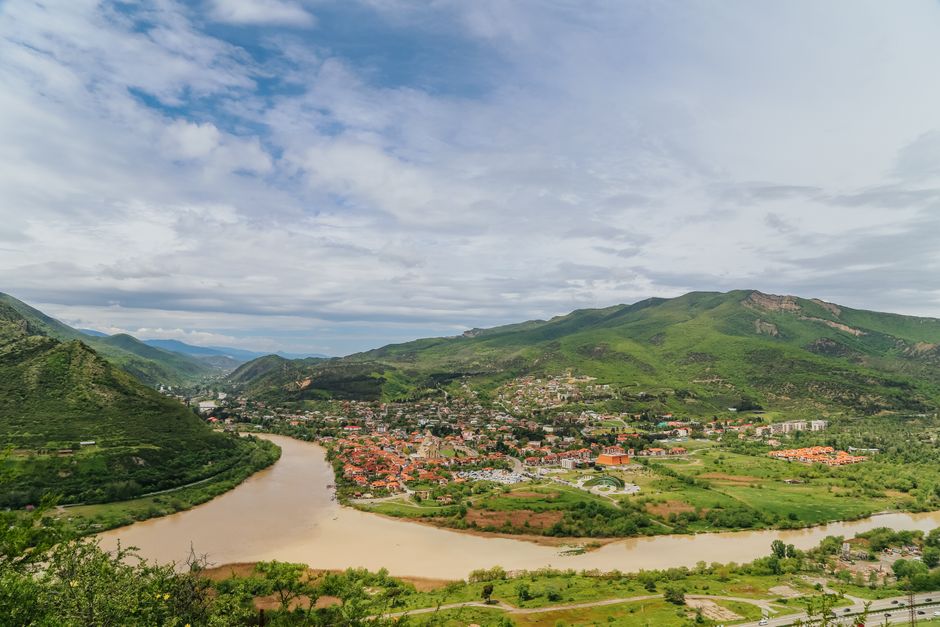
Mtskheta sits at the confluence of two rivers and two thousand years of Georgian faith, a small town that punches absurdly above its weight in spiritual significance.
This was Georgia's capital when Rome was still an empire, the place where Christianity took root in the Caucasus in 337 AD, and it remains the beating heart of Georgian Orthodoxy today. The Svetitskhoveli Cathedral — the 'Life Giving Pillar' — rises from the town center like a stone sermon, built in 1010 over the site of Georgia's very first church, its walls holding the tombs of ancient kings and, according to tradition, Christ's robe itself.
What sets Mtskheta apart is how the sacred and the everyday coexist without pretense. Grandmothers in black headscarves light candles beside young couples taking wedding photos. The cathedral isn't roped off or museumified — it's a working church where incense drifts through shafts of light and liturgical chanting echoes off millennium-old frescoes. Twenty minutes up a winding road, the 6th-century Jvari Monastery perches on a cliff overlooking the exact spot where those two rivers merge, a view so iconic it inspired Georgia's national poet Lermontov. Get there before dusk on a clear day and you'll understand why.
At just 20 kilometers from Tbilisi, Mtskheta sees its share of day-trippers, but most arrive by bus, snap photos at Svetitskhoveli, and leave within two hours. Stay longer — walk the quieter streets near Samtavro Monastery where nuns tend gardens behind ancient walls, catch the October city festival when folk dancers gather around the cathedral, or simply sit in one of the family-run cafes watching the light change over the mountains. The town rewards those who linger with something the quick visitors miss: the feeling of standing at the wellspring of an entire nation's identity, in a place that has held that role for nearly three millennia.
Photo by Marina Abrosimova on Pexels
Why it's Unbeaten
Out of the main current, in the right way.
Most visitors to Georgia rush through Mtskheta as a day trip from Tbilisi—a 20-minute marshrutka ride that feels obligatory rather than exploratory. They tick off the two main churches and leave by afternoon, treating it as a UNESCO checkbox rather than a destination. The problem is that Mtskheta's significance gets lost in this hit-and-run approach. This was Georgia's capital for over 700 years and remains the spiritual heart of the Georgian Orthodox Church. While Tbilisi grabs the attention with its sulfur baths and nightlife, Mtskheta's quieter power—the weight of 1,700 years of continuous religious and cultural importance—barely registers with tourists moving at speed.
The main event
What you'll actually do in and around Mtskheta
01
Svetitskhoveli Cathedral (The Life Giving Pillar)
Built in 1010 on the site of Georgia's first church, this is one of the most sacred sites in Christendom—Georgia adopted Christianity as its official religion here in 337 AD. The interior contains the graves of ancient Georgian kings, including Saint Nino's burial site. The architecture itself is a masterclass in medieval Caucasian church design; spend time inside to feel the weight of 1,700 years of continuous worship.
02
Jvari Monastery at sunset (with clear weather)
This 6th-century clifftop monastery represents the pinnacle of early Christian Georgian architecture and offers sweeping views over the Aragvi-Mtkvari river confluence and the surrounding mountains. Timing is crucial: visit in clear weather and aim for late afternoon so you catch the light changing over the landscape. The hike up is steep but manageable if you use the shuttle; the views justify the effort entirely.
03
Samtavro Monastery
Less crowded than Svetitskhoveli and Jvari, this working monastery in the quieter south of town contains the relics of Saint Nino, who brought Christianity to Georgia. The churches here are smaller and more intimate, with peaceful grounds where you can sit and observe local pilgrims at prayer. It's a genuinely spiritual place, not a tourist circuit.
04
Walk the river confluence at dawn
Few visitors arrive early enough to see Mtskheta without crowds. Walk along the banks where the Aragvi and Mtkvari rivers meet at first light—you'll see the monuments reflected in still water and understand why this location was chosen as an ancient capital. The landscape itself is the story here.
05
Mtskheta City Festival (14 October)
If your dates align with mid-October, this annual festival around Svetitskhoveli Cathedral combines folk dances, traditional music, craft stalls, and religious ceremonies. It's one of Georgia's most authentic cultural events—locals outnumber tourists, and you'll eat real khachapuri and khinkali while watching genuine celebration, not performance.
06
Georgian Air Balloon Open Competition (October)
If you're there in early October, the skies above Mtskheta fill with hot air balloons launching at dawn. It's surreal and beautiful—the ancient religious monuments framed by modern sport and technology. Check dates in advance; this isn't guaranteed every year.
Taste of Mtskheta
Where to eat
Mtskheta's food scene is genuinely good and vastly cheaper than Tbilisi. Georgian cuisine here is cooked by people who grew up eating it, not chefs trying to modernize tradition. You'll find khachapuri (cheese bread), khinkali (meat dumplings), stewed meats, and fresh vegetables done simply and well. Many guesthouses include meals, which is worth taking advantage of—family dinners often reveal local dishes you won't find on restaurant menus. The outdoor dining culture is strong, especially in warm months, with restaurants using the pleasant riverside setting properly.
Cafe GugaIndoor and outdoor seating with private dining 'huts' for larger groups. The Georgian cuisine is outstanding—khachapuri here actually justifies the hype—and costs 8-15 lari per main dish. The outdoor setting in warm weather is genuinely pleasant, and the quality-to-price ratio makes it worth a specific trip from Tbilisi.
SalobieLarge restaurant on the road between Mtskheta and Tbilisi with both covered and open seating areas. The food is exceptionally good (not just 'good for the price'), with traditional Georgian stews, grilled meats, and fresh bread. Expect to pay 10-18 lari for a full meal; it's popular with local families, not tourists.
02 / The honest read
Is Mtskheta your kind of trip?
Best for
+ History enthusiasts
+ Religious pilgrims
+ Architecture lovers
+ UNESCO heritage seekers
+ Slow travellers
Think twice if you want
x Party seekers
x Beach lovers
x Nightlife-focused travellers
Effort and reward
Planning
2/5
Physical effort
2/5
Self-reliance
3/5
Scenery
4/5
Culture
5/5
Difficulty breakdown
What "2/10" actually means
Language barrier3/10
Georgian is primary language, but tourist infrastructure and signage at major sites provide basic guidance.
Logistics2/10
Small town walkable on foot; reaching Jvari requires hiring a cab (15 lari) or tourist shuttle (5 lari) from town center.
Physical demand3/10
Walking the town is easy, but reaching Jvari Monastery involves either a steep hike on an unsafe road or organized transport.
Infrastructure3/10
Basic facilities exist for tourists, though public transport to outlying monasteries is limited.
Mtskheta is a compact, highly walkable destination ideal for short visits focused on UNESCO monuments. While the town itself requires minimal logistical planning, accessing Jvari Monastery requires arranged transport due to road hazards. This makes it perfectly manageable for most visitors with one to two days available.
Read this before booking
The honest caveats
Mtskheta suffers from being too close to Tbilisi. You'll share the monuments with tour groups moving on a schedule, especially between 11am and 3pm. If you stay overnight, you'll have the site almost to yourself in early morning and late afternoon—this alone justifies an overnight stay. The beggar presence at Svetitskhoveli's entrance gate can feel uncomfortable if you're not used to it; they're not aggressive, but it's persistent. Jvari Monastery is genuinely difficult to reach without a taxi or shuttle because the walking route involves a dangerous stretch of main road with blind bends and reckless drivers. Don't attempt it on foot unless you're very confident with mountain terrain and traffic. The town itself has limited amenities compared to Tbilisi—no nightlife, limited shopping, minimal English spoken outside tourism-focused businesses. This is by design and part of the appeal, but it's not a destination for people seeking creature comforts or entertainment beyond the monuments.
Safety & health
Mtskheta is a safe destination for tourists with minimal crime affecting visitors. Standard precautions apply: avoid displaying valuables, be aware of pickpocketing in crowded areas, and use registered taxis. Georgia has good medical facilities in nearby Tbilisi; travel insurance is recommended. Vaccinations for hepatitis A and typhoid are advisable; ensure routine immunizations are current. Tap water in Mtskheta is generally safe, though bottled water is widely available. Medical emergencies should be directed to Tbilisi hospitals 20 minutes away.
Official advisoryLevel 1
Exercise Normal Caution. Georgia maintains Level 1 advisory as of March 2026 with stable security environment.
Advisories change. Verify with the US State Department before travelling. Last reviewed: 2026.
03 / Make it real
Plan the trip
Spring (April-May)
Why go: Pleasant 15-20°C temperatures, clear skies ideal for Jvari views and photography, wildflowers blooming in the river valleys, manageable crowd levels
Watch for: Occasional rain can obscure Jvari views; some roads still muddy from winter melt
Autumn (September-October)
Why go: Stable, clear weather perfect for both monuments, cool mornings and warm afternoons, possibility of Georgian Air Balloon Competition or Mtskheta City Festival, fewer tourists than summer
Watch for: October weather becomes unpredictable; early October can still be warm and crowded with domestic tourists
Summer (June-August)
Why go: Guaranteed clear skies, warm weather, long daylight hours
Watch for: Peak tourist season with large tour groups dominating monuments between 10am-4pm; can feel commercialized and crowded; heat can be oppressive in July
Getting there
Getting there
Mtskheta sits 20km northwest of Tbilisi, making it absurdly easy to reach but easy to dismiss. From Tbilisi International Airport (Shota Rustaveli), take a marshrutka (minibus) from Didube station—the main transport hub in the city's north—for around 1-2 lari; the journey takes 30-40 minutes depending on traffic and stops. Alternatively, hire a taxi for 20-30 lari if you're traveling with luggage or arriving late. If you're coming from elsewhere in Georgia, any bus heading to or through Tbilisi passes through Mtskheta. There's no train station in Mtskheta itself. Once in town, everything is walkable except Jvari Monastery, which sits on a cliff above the town; either hire a local taxi (15 lari return) or use the 5-lari shuttle from the tourist office opposite Svetitskhoveli Cathedral. The main road into town has chaotic driving, so don't attempt the Jvari hike unless you're comfortable with exposed mountain paths and aggressive traffic.
Visa & entry
Entry requirements
US, UK, and EU citizens enjoy visa-free entry to Georgia for up to one year, provided their passport is valid for the duration of their stay. Since January 1, 2026, all foreign tourists must carry travel medical insurance with a minimum coverage of 30,000 GEL (approximately $11,000 USD). EU citizens may enter with a valid national ID card in lieu of a passport. Travelers should verify their specific nationality on the official GeoConsul portal, as eligibility can vary, though citizens of 94 countries and territories—including all EU states, the UK, US, Canada, Australia, and New Zealand—are on Georgia's visa-free list.
PassportRequirementMax stayDetails
USVisa-free365 days (1 year)Mandatory travel insurance (30,000 GEL min.) required as of Jan 1, 2026. Passport valid for entire stay. Official portal
UKVisa-free365 days (1 year)Mandatory travel insurance (30,000 GEL min.) required as of Jan 1, 2026. Passport valid for entire stay. Official portal
EUVisa-free365 days (1 year)Mandatory travel insurance (30,000 GEL min.) required as of Jan 1, 2026. National ID card accepted in lieu of passport for EU citizens. Official portal
Requirements may change. Confirm with the relevant embassy or official immigration authority before booking.
Daily budget
What it costs once you're there
USD per person/day, double occupancy, excluding international flights (2026-06-16)
Budget$75Includes lodging $10, food $20, activities $25, local transport $20. Lodging anchored to Guesthouse Lizi. medium confidence
Midrange$155Includes lodging $10, food $40, activities $60, local transport $45. Lodging anchored to Rooms in private homes near Samtavro Monastery. medium confidence
Splurge$300Includes lodging $10, food $70, activities $130, local transport $90. Lodging anchored to Mtskheta Sanapiro Guest House. medium confidence
Base yourself well
Where to stay
Search live availability
Use the curated stays below as a starting point, then compare current inventory and prices.
Family-run B&B$15/night (30 lari per person including breakfast and dinner)
Guesthouse Lizi
Intimate guesthouse within walking distance of all central sights. The owners cook dinner, so you get a genuine home experience and insider knowledge of the area. Quiet, clean rooms with free internet—perfect if you want to stay overnight and avoid the day-tripper rush.
Guest House$20-30/night
Mtskheta Sanapiro Guest House
Spacious rooms with balcony views directly overlooking Jvari Monastery, Svetitskhoveli Cathedral, and the river confluence. The owner is genuinely warm and serves excellent breakfast. Location is peaceful and quiet, yet central enough to walk to everything.
Homestay/Private room$18-25/night
Rooms in private homes near Samtavro Monastery
Several locals rent out spare rooms in the quieter southern part of town near Samtavro. You'll find these through local tourism boards or by asking around. Cheaper than formal guesthouses and often include meals; you get a real sense of how locals live.
Language, useful phrases, and cultural notes +
Georgian / English: Basic
Simple tourist phrases only in hotels and main attractions - most locals speak no English. Translation app strongly recommended
Georgian hospitality is legendary—expect warm welcomes and generous offers of food and drink, which are important social gestures. Respect for religious sites is essential; dress modestly when visiting churches and monasteries. The Georgian alphabet is unique and widely visible; learning a few phrases shows appreciation for local culture.
HelloGamarjobagah-mahr-JO-bah
Thank youMadlobamahd-LO-bah
How much?Ramde gharial?RAHM-deh GAH-ree-ahl
Where is...?Sait aris...?sah-EET AH-rees
Excuse meBachebitbah-cheh-BEET
04 / Keep going
Nearby & beyond
20 km, 30 minutes by marshrutka
Tbilisi
Georgia's vibrant capital offers modern culture, nightlife, and museums alongside historic Old Town architecture.
50 km west, 1 hour by minibus
Gori
Home to Stalin's birthplace museum and the medieval Gori Fortress overlooking the Mtkvari River.
30 km north via Georgian Military Highway, 1.5 hours by car
Dusheti
Mountain village gateway to the Caucasus with hiking trails and traditional Georgian highland culture.