Overview
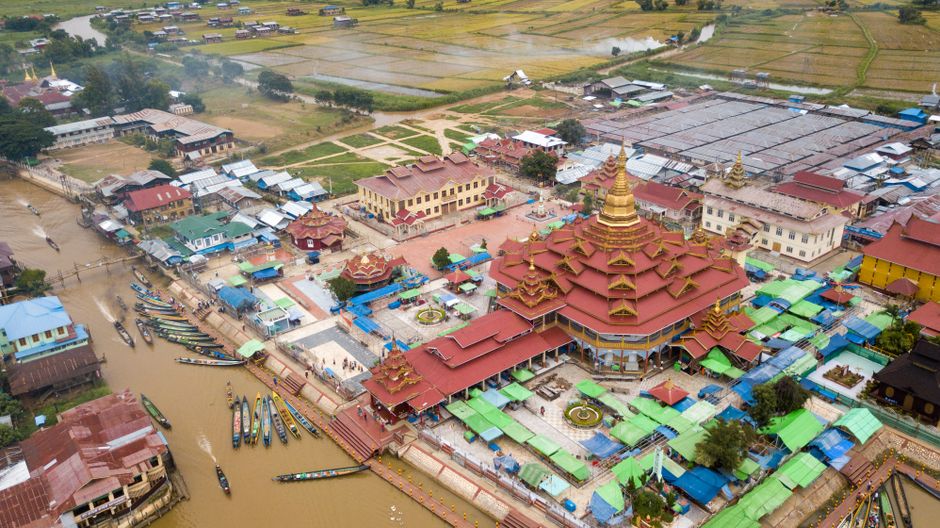
Mrauk U sits in western Myanmar's Rakhine State like a forgotten kingdom swallowed by rice paddies and mist. While Bagan's temples crawl with tour buses, here you'll find over 700 Buddhist temples and pagodas—some dating to the 15th century—where the only footsteps echoing through Shitthaung Temple's labyrinth of stone corridors are your own. The Kothaung Pagoda, claimed to house 90,000 Buddha images in its honeycomb passages, emerges from morning fog with a presence that feels less like a monument and more like a living ruin. At dawn from Haridaung Hill, you'll watch the sun break over temple spires rising from farmland where women in conical hats harvest rice as they have for centuries, completely indifferent to the archaeological treasure surrounding them. The town itself remains stubbornly uncommercialized—there are no Starbucks coming to Mrauk U. You'll eat mohinga for breakfast at family-run teahouses where no one speaks English but everyone shares their table, and stay in guesthouses where the owner's mother might invite you to help make laphet thok in the kitchen. The nearby Chin villages, where older women still bear traditional facial tattoos, offer genuine cultural encounters that haven't been staged for cameras. However, this remoteness comes with serious caveats that go far beyond typical travel inconveniences. Myanmar faces active armed conflict across the country, arbitrary detention of foreigners, and a Level 4 'Do Not Travel' advisory from the U.S. State Department. Rakhine State has its own complex security situation, and what local operators claim is 'safe' exists within a broader context of civil war, potential landmines, collapsed healthcare infrastructure, and a military regime known for detaining critics. Travelers have been trafficked into forced labor. The magic of Mrauk U is real, but in 2024-2025, visiting requires accepting risks that extend well beyond what any responsible travel guide can recommend. This is not a place for casual wanderlust right now—it's a destination requiring serious ethical consideration and security awareness that most travelers cannot adequately assess.
Why It's Unbeaten
Before 2017, Mrauk U saw roughly 10,000 annual visitors—a fraction of Bagan's half-million. Post-2017, those numbers collapsed to dozens per month as international attention focused on Rakhine State's humanitarian crisis and travel advisories multiplied. The region requires special permits that many tour operators avoid, and most travelers self-censor it from itineraries entirely. The journey itself—a bone-rattling drive or slow river journey from Sittwe—deters casual visitors. Myanmar's 2021 military coup added another layer of complication, though Rakhine State has remained relatively stable compared to other regions. The result: one of Asia's most significant archaeological sites remains so untouristed that guesthouse owners remember individual visitors by name months later.
The US State Department advises against all travel to Myanmar due to escalating armed conflicts across all regions and instability affecting government control.
Advisory based on knowledge as of 2025. Always check travel.state.gov for the most current information.
Who Is This Trip For?
Recommended age range: 30-60
Ages 30-60
✓ Experienced adventurers
✓ Archaeological enthusiasts
✓ Photographers seeking untouched subjects
✓ Off-grid travelers comfortable with extreme risk
May be challenging outside ages 30-60
✗ Families with children
✗ First-time international travelers
✗ Anyone with medical conditions
✗ Those uncomfortable with significant personal risk
✗ Travelers seeking reliable communication
✗ Luxury travelers
Getting There
Most travelers fly into Yangon (the main international hub) or Mandalay, then face a choice: fly or drive to Sittwe, Rakhine State's capital, which is the gateway to Mrauk U. From Yangon, you can take an internal flight to Sittwe (roughly 1.5 hours, but availability varies) or drive west via Pathein—a 10-14 hour slog that's memorable but punishing. From Mandalay, the journey is even longer and less direct. Once in Sittwe, the final 45km to Mrauk U is a rough river journey (motorboat, 2-3 hours upstream on the Kaladan River) or a potholed road by car (1.5-2 hours, depending on conditions). Book your onward transport in Sittwe itself; options are limited and schedules flexible. The Kaladan River boat ride is genuinely part of the experience—you'll pass fishing villages, stilted houses, and landscape that feels untouched. It's slow, but that's the point. Bring cash in Myanmar kyat; ATMs exist but aren't reliable. Travel agents in Yangon or Mandalay can arrange the full journey, though independent travelers can piece it together by asking at guesthouses in Sittwe. The isolation that makes Mrauk U special is directly tied to how hard it is to reach—accept the friction as part of the magic.
Budget Guide
Budget
$35USD / day≈ 73,490 MMK
Basic guesthouses ($8-12/night), street food and local restaurants ($2-5 per meal), local transport, and free or low-cost attractions.
Midrange
$75USD / day≈ 157,479 MMK
Mid-range hotels ($25-40/night), meals at decent restaurants ($5-10 per meal), local tours, and archaeological site entrance fees.
Splurge
Limited luxury accommodation and services available in Mrauk U due to conflict and infrastructure constraints. Best options are comfortable mid-range guesthouses. High-end dining and international standard amenities are scarce.
* USD amounts are approximate. Exchange rates refresh hourly via Frankfurter.
Visa & Entry
All foreign nationals, including US, UK, and EU citizens, require a visa to enter Myanmar. Tourist visas are available and typically valid for 28 days. Visas can be obtained through Myanmar embassies and consulates abroad, with processing times varying by location. A valid passport with at least 6 months validity from the date of entry is required. Recent color photographs (4cm x 6cm) are also needed for visa applications. Given the current Level 4 travel advisory issued by the US State Department on January 9, 2025, travelers are strongly advised against visiting Myanmar due to escalating armed conflicts affecting all regions and states.
US
Visa RequiredPassport must be valid for at least 6 months. Two recent color photos required. US State Department advises against all travel (Level 4 advisory).
Apply:Myanmar Embassy or Consulate
UK
Visa RequiredVisa-on-arrival available. Passport validity of 6 months required.
EU
Visa RequiredTourist visa valid for 28 days. Multiple entry visas also available for longer stays.
Apply:Myanmar Embassy or Consulate
Visa requirements are based on publicly available information and may have changed. Always confirm with the official embassy or consulate before travelling.
Where to Stay
Search for accommodation
The properties below are curated suggestions. You can also search directly on a booking platform.
Note on contact information: Where available, contact details are sourced from publicly available records and may be out of date.
Basic, friendly, locally run. Rooms are simple (cold water, no frills) but genuinely welcoming. The owner knows Mrauk U intimately and can arrange guides or boat trips. This is where many independent travelers end up, and for good reason—it feels authentic without pretension.
AddressMrauk U, Rakhine State, Myanmar
The closest thing to comfort in town—AC, hot water, decent restaurant. Views overlook the river and surrounding hills. Not luxurious by international standards, but feels indulgent after a rough journey here. Worth the upgrade if your budget allows.
Phone+95 9 421110066
AddressMrauk U, Rakhine State, Myanmar
Smaller, quieter option on the hill with a few rooms and a terrace. Run by a retired teacher who speaks English well and enjoys talking about Mrauk U's history. Less touristy than Shwe Thein Tan, more peaceful.
AddressMrauk U, Rakhine State, Myanmar
Spartan but immaculate. Shared bathrooms, communal breakfast area where you'll meet other travelers. The cheapest option and surprisingly cheerful—good for backpackers or those who want to stretch their budget.
AddressMrauk U, Rakhine State, Myanmar
What to Do
The jewel of Mrauk U: a 16th-century temple where 80,000 Buddha images are carved into stone pillars and walls, creating a labyrinth of devotional art. Walk through the narrow corridors slowly—your eyes adjust to the darkness, and the sheer scale of hand-carved Buddhas becomes almost meditative. This is what happens when faith becomes architecture.
Less visited than Shittaung, equally hypnotic. The temple contains over 2,000 stone Buddha images, and the courtyard has a hushed, almost mournful beauty. Climb to the roof at late afternoon when light floods through the stone galleries. Bring a torch; sections are genuinely dark.
Unlike Bagan's crowded sunrise platforms, you might have these hilltop temples entirely to yourself. The valley fills with mist, temples emerge like islands, and the light turns everything rose-gold. Ask your guesthouse to arrange a guide the night before; it's worth the early start.
Skip the temple circuit for a morning and simply walk. You'll pass monk's quarters, family homes, a small market selling fish and mangoes, children in school uniforms. Mrauk U is a living place, not a museum, and the everyday rhythms are as rewarding as the temples themselves.
Hire a longtail boat for a half-day drift downstream. You'll see fishing villages, people washing clothes and elephants in the water, and the landscape that has changed little in centuries. The river is the lifeblood here; experiencing it this way connects you to how locals actually live.
Grab strong shan tea and a pastry at any local teashop. Watch monks collecting alms, vendors setting up stalls, the pace of life that doesn't rush. Conversations often start here—locals are curious about visitors and genuinely friendly. Some of the best hours in Mrauk U happen while doing seemingly nothing.
Where to Eat
Mrauk U's food scene is humble and local—expect rice, curries, dried fish, and fresh vegetables. Tourist restaurants near hotels serve a fusion of Myanmar and Western dishes, but the real eating happens at small family-run tea shops and in locals' homes if you're invited. Breakfasts are usually shan noodles or rice porridge. Lunches center on curry with rice and side dishes. Dinners are quieter—you eat earlier here, and restaurants close by 8pm. Fresh fish from the Kaladan is excellent when available; ask what's been caught that day rather than ordering from a static menu.
Pick any small shop with plastic chairs and a wood-fired stove. Order shan noodles (thin egg noodles with pork or chicken) or mohinga (rice noodle soup with fish broth and turmeric). Cost: $1-2. These are the breakfast and lunch staples; eating where locals eat guarantees authenticity and good value.
If you want sit-down service and a wider menu, this is your best bet. The curries are solid, the fried fish from the river is excellent, and they can accommodate dietary preferences. Mains run $3-6. The river views at dinner make it feel special without being pretentious.
Many guesthouses offer simple home-cooked dinners if you ask in advance (usually $2-4 per person). These are family meals—curry, fresh vegetables, rice, sometimes dried fish. It's the best way to eat in Mrauk U; you sit with the family, taste real cooking, and often learn stories about the town.
Language & Culture
Official Language
Burmese
English Spoken
Basic
Simple tourist phrases only in hotels and main attractions — most locals speak no English
📱 Translation app strongly recommended
Cultural Tips
Remove shoes before entering temples and religious sites. Dress modestly with shoulders and knees covered, especially at religious monuments. Never point your feet toward Buddha images or monks, and avoid touching anyone's head. The Rakhine people have their own distinct cultural identity and dialect.
Useful Phrases
Safety & Health
CRITICAL WARNING: The US State Department has issued a Level 4 'Do Not Travel' advisory for Myanmar due to armed conflict, civil unrest, arbitrary enforcement of local laws, landmines, wrongful detentions, and poor healthcare infrastructure. Rakhine State, where Mrauk U is located, has experienced significant armed conflict and ethnic violence. The security situation can change rapidly with little warning, and areas may become inaccessible. Travelers who choose to visit despite this advisory face serious risks including being caught in crossfire, arbitrary detention, and inability to evacuate. Healthcare facilities in Mrauk U are extremely limited — the nearest adequate medical care is in Sittwe, and even that is basic. For serious medical emergencies, evacuation to Yangon or Thailand would be necessary. Recommended vaccinations include Hepatitis A and B, Typhoid, Japanese Encephalitis, Tetanus, and ensuring routine vaccinations are current. Malaria prophylaxis is strongly recommended as Rakhine State is a high-risk zone. Bring all necessary medications as pharmacies are scarce. Additional risks include unexploded ordnance and landmines in rural areas, waterborne diseases, and limited communication infrastructure. Travel insurance with emergency evacuation coverage is absolutely essential, though many insurers will not cover travel to Level 4 advisory destinations. If traveling despite warnings, register with your embassy, maintain multiple communication methods, and have extraction plans in place.
Best Time to Visit
The sweet spot is October to February: cool enough to walk around temples without collapsing, low rainfall, and electricity more reliable. November and December are ideal. Avoid March-May (oppressive heat) and June-September (monsoon, flooding, access issues).
✓ Clear skies, manageable temperatures, temples and villages accessible, boat schedules reliable. November-December are perfection—you can actually enjoy exploring without heat exhaustion. Locals are less rushed; the whole rhythm of town is more present.
✗ This is peak season, so prices are highest and other travelers more likely (though 'peak' here means maybe a dozen tourists, not crowds). Book accommodation ahead. Mornings can be cool enough to need a light layer.
✓ Ultra-cheap accommodation and fewer tourists. Sunsets are spectacular through the heat haze. If you have heat tolerance and flexibility, it's deeply rewarding—the town feels entirely yours.
✗ Genuinely brutal daytime heat (40°C+). You'll be limited to early morning and late afternoon activities. Water shortages sometimes occur. Long exposure to this heat can be dangerous; only viable for hardy travelers.
✓ Lush, green landscape. Prices rock-bottom. Fewer tourists. If you love rain and moisture, it's atmospheric.
✗ Heavy daily rainfall makes exploring difficult. Some temples and villages flood or become inaccessible. Boat schedules unreliable. Electricity sporadic. Mold and dampness everywhere. Not recommended unless weather is genuinely your preference.
Honest Caveats
Here's what might frustrate you: Mrauk U is genuinely remote, which means inconsistent electricity, limited internet, and no real medical facilities. If you get sick, you're heading to Sittwe. The temple circuit can feel repetitive if you're not deeply interested in Buddhist architecture—yes, there are many carved Buddhas, and after the fifth temple, they start to blur together. The heat is brutal (March-May is scorching), and the monsoon (June-September) makes some areas inaccessible and everything damp. Accommodation is basic; don't expect luxury. The final boat ride to get here can be choppy, and schedules are unreliable—you might wait a day or two in Sittwe for enough passengers to fill a boat. One significant concern: Myanmar's current political situation (military junta, civil unrest, 2021 coup) means your government may advise against travel entirely. Security in Rakhine State has historically been fragile. Before booking, check your government's travel advisory and genuine recent reports from travelers. The experience of Mrauk U—its magic—relies partly on it being off the beaten path. That isolation can also feel uncomfortable or genuinely risky depending on the moment. Go with clear eyes about what you're signing up for.
Difficulty Breakdown
Overall
9/10
Very Difficult
Language Barrieri
8/10
Challenging
Logisticsi
10/10
Very Difficult
Physical Demandi
5/10
Moderate
Infrastructurei
3/10
Easy
What This Means
Mrauk U represents one of the most challenging destinations in Southeast Asia even before considering the security situation. The combination of remote location, poor infrastructure, ongoing conflict in Rakhine State, and the Level 4 travel advisory makes this an extremely difficult and risky destination. Only the most experienced, risk-tolerant travelers with thorough preparation should consider visiting, and only after confirming current access is permitted.
Nearby Destinations Worth Combining
Click any destination to see why it pairs well with Mrauk U.
Location
Map data © OpenStreetMap contributors