Overview
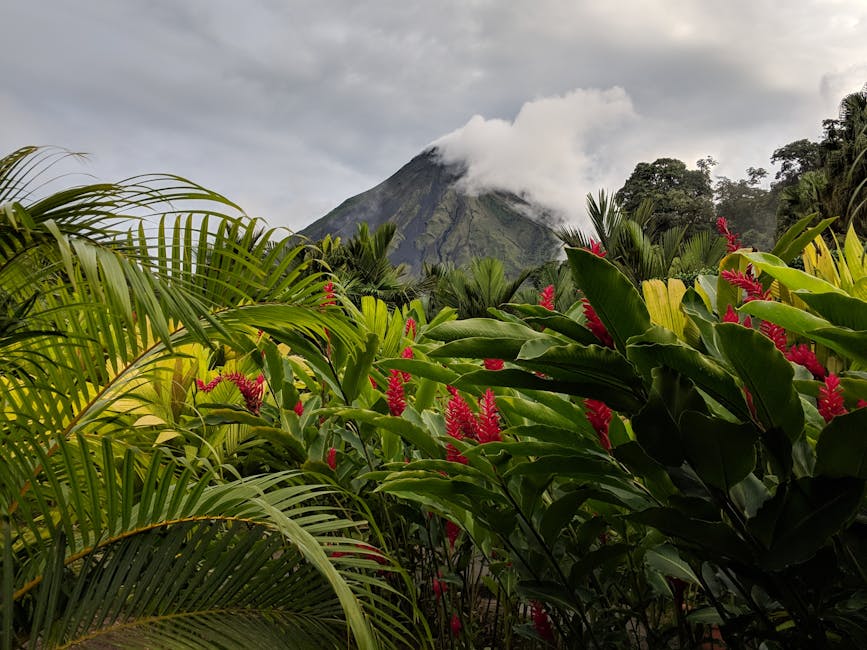
Here's the truth about La Fortuna: it's not undiscovered, and the Arenal Volcano looming over everything pretty much guarantees that. But what makes this place different is that the adventure infrastructure actually works in your favor. While other hotspots feel overrun, La Fortuna's sheer abundance of rivers, waterfalls, and rainforest trails means crowds dissipate quickly once you're twenty minutes outside town. The volcano itself—a near-perfect cone that dominates every sightline—delivers that rare combination of accessibility and genuine wildness. The magic here is in the layers. You can hike the El Silencio Trail through primary rainforest with actual lava rocks underfoot, then spend the afternoon rappelling down waterfalls or floating quietly down the Peñas Blancas River watching howler monkeys in the canopy. The hot springs that bubble up from volcanic veins aren't just a gimmick—they're scattered throughout the region, from elaborate resort setups to hidden river pools where locals still go. This isn't a place where you're watching nature through glass; you're wading through it, sweating in it, occasionally getting rained on by it. What travelers appreciate most is the lack of pretense. La Fortuna is still fundamentally a small Tico town that happens to sit in an absurdly biodiverse pocket of Costa Rica. The tourism here is adventure-focused rather than resort-focused, which means you're more likely to end up muddy and exhilarated than pampered and passive. Day trips to Tenorio Volcano National Park are feasible, the food is straightforward and good, and you can genuinely structure two or three days here around either hardcore adventure (waterfall rappelling, Class III rafting) or slow-paced nature immersion (sloth trails, hanging bridges, chocolate tours) without feeling like you're missing the 'real' experience either way.
Why It's Unbeaten
La Fortuna has become more visible over the past decade, but it remains overshadowed by the Central Valley and Caribbean coast in most mainstream Costa Rica itineraries. Most package tourists stick to Manuel Antonio, Monteverde, or the Osa Peninsula—destinations with stronger international marketing and easier accessibility. What makes La Fortuna genuinely under-the-radar is that it requires deliberate effort to reach; it's not on the way to anywhere else, which filters out drive-through tourists. The Arenal Volcano, despite being Costa Rica's most recognizable natural landmark, draws far fewer visitors than you'd expect because it hasn't erupted visibly since 2010, and many outdated guidebooks still market it as an active lava-spewing spectacle.
Exercise increased caution in Costa Rica due to crime concerns; review local laws and embassy guidance before traveling.
Advisory based on knowledge as of 2025. Always check travel.state.gov for the most current information.
Who Is This Trip For?
Recommended age range: Ages 10+
Ages Ages 10+
✓ Adventure seekers
✓ Nature and wildlife enthusiasts
✓ Experienced independent travellers
✓ Hikers and outdoor enthusiasts
✓ Photographers
✓ Eco-tourists
May be challenging outside ages Ages 10+
✗ Luxury beach holiday seekers
✗ Travellers with limited mobility
✗ First-time Central America visitors seeking ease
✗ Nightlife-focused travellers
Getting There
Most travellers fly into San José (Juan Manuel Santamaría International Airport) and face a 5-6 hour drive northwest to La Fortuna. There's no direct bus from the airport, so you'll need to arrange a shuttle service ($60-100) or rent a car and drive via Highway 27 to Highway 1, then head north. Alternatively, fly into Liberia International Airport (4 hours away) if you're coming from the north or want a shorter transfer. The final 20km into La Fortuna from the main highway is decent paved road but narrow and winding; don't expect it to be fast. If you're patient with buses, the San José-La Fortuna route takes 8-10 hours with connections, but it's cheaper ($15-25) and gives you a real sense of the country's geography.
Budget Guide
Budget
$50USD / day≈ 22,990 CRC
Basic accommodation in hostels/budget guesthouses ($15-20), street food and simple meals ($15-20), local transport ($5-10), attractions ($5-10)
Midrange
$100USD / day≈ 45,980 CRC
Mid-range hotel ($40-50), restaurant meals ($25-35), guided tours or activities ($20-30), transport and incidentals ($10-15)
Splurge
$220USD / day≈ 101,155 CRC
Upscale resort or eco-lodge ($80-120), fine dining and quality restaurants ($50-70), premium tours and adventure activities ($40-50), spa treatments and recreation ($20-30)
* USD amounts are approximate. Exchange rates refresh hourly via Frankfurter.
Visa & Entry
US residents, Canadian citizens, and EU/Schengen country residents do not require a visa to enter Costa Rica and can stay visa-free for up to 90 days. US citizens need only a valid passport with at least 6 months validity from the date of entry. UK residents and other nationalities may have different requirements depending on their citizenship; UK eVisa holders must apply for a Costa Rican visa in advance. Proof of onward or exit travel and yellow fever vaccination proof may be requested upon arrival.
US
Visa-freeUS residents do not require a visa. Passport must be valid for at least 6 months from entry date.
Apply:Costa Rican Immigration Authority
UK
Visa RequiredUK eVisa holders must apply for a Costa Rican visa in advance at the nearest Costa Rican consulate. Visa must be applied for in person.
EU
Visa-freeEU/Schengen country residents do not require a visa. Passport must be valid for at least 6 months from entry date.
Apply:Costa Rican Immigration Authority
Visa requirements are based on publicly available information and may have changed. Always confirm with the official embassy or consulate before travelling.
Where to Stay
Search for accommodation
The properties below are curated suggestions. You can also search directly on a booking platform.
Note on contact information: Where available, contact details are sourced from publicly available records and may be out of date.
Built directly over natural thermal springs from the volcanic aquifer, with lush gardens and access to private hot spring pools. It's touristy but genuinely situated on beautiful grounds; worth it if you want creature comforts and don't mind paying for it. The on-site restaurant is solid and saves you the hassle of finding food after a long day of activities.
Contact details unavailable — try searching online or a booking site.
Search "Tabacón Grand Spa & Thermal Resort" on Booking.com →Smaller than Tabacón with personal attention and excellent volcano views from certain rooms. The spa is legitimately good and they offer in-house activity coordination without pushy sales tactics. Good middle ground between comfort and authenticity.
Contact details unavailable — try searching online or a booking site.
Search "Arenal Kioro Suites & Spa" on Booking.com →Run by locals, rustic but clean, with real forest surroundings rather than landscaped gardens. No frills, but you'll get honest advice on activities and meet other independent travellers. The communal kitchen and porch are good for swapping stories.
Contact details unavailable — try searching online or a booking site.
Search "La Fortuna Eco Lodge" on Booking.com →No-nonsense, family-run, in town proper. Rooms are basic but well-maintained and the owners are genuinely helpful with transport and local information. Best for travellers who want to be in the village rather than isolated in a resort.
Contact details unavailable — try searching online or a booking site.
Search "Hotel Magic Mountain" on Booking.com →What to Do
A guided hike (4-5 hours) through secondary forest to reach the volcano's base and old lava flows. You won't see active eruptions anymore, but the landscape itself is dramatic and geologically interesting. Start early; group tours run $61-110, and the morning light on the volcano is far better than afternoon.
Descend down a series of waterfalls using ropes and harnesses in the rainforest. It's genuinely thrilling without requiring prior climbing experience, and you end up swimming in natural pools. Tours typically cost $99-161 depending on difficulty; do this early in your stay in case you realize it's not for you.
Walk across suspension bridges suspended 40-50 meters above the rainforest canopy. It's partly touristy but genuinely offers a perspective on the forest you can't get from the ground. Go early morning for wildlife spotting; afternoon groups are loud and animals disappear.
A peaceful float down the river on a raft, spotting wildlife (sloths, caimans, birds) without the adrenaline of whitewater. This is the real version of 'wildlife watching'—no guarantees, binoculars required, but intimate if you go with a smaller group rather than a cruise-ship-sized tour.
About 90 minutes south of La Fortuna, this park features the stunning blue-water Río Celeste and less crowded hiking than Arenal. The hike to the Rio Celeste waterfall is moderate (2-3 hours round trip) and the water colour is genuinely otherworldly. Worth a full day if you have time; it's less visited than Arenal.
See how cacao and coffee grow in the local microclimate, harvest by hand, and process it yourself. Tours run $85-128 and typically include tasting. It's educational without being condescending, and you support local farmers directly.
Where to Eat
La Fortuna's food scene is straightforward: expect fresh tropical fruit, rice-and-beans staples, fresh-caught tilapia, and good coffee. The town has no haute cuisine, and that's intentional—it's a working agricultural region, not a resort destination. Local sodas (small family-run restaurants) serve casados (set meals) for $7-12 and are where you'll eat best and cheapest. Most hotels and restaurants cater to tourists with familiar options, which means you can always find pasta or chicken if you're cautious with food, but it also means missing out if you don't venture into town proper.
Look for places serving casados—a plate with rice, beans, salad, and a choice of protein. They change daily and cost $8-12. This is authentic local eating and where you'll find the best value and real flavour.
For breakfast, go to a café serving gallo pinto (rice-and-bean mix) with fresh juice and locally roasted coffee. Expect to pay $5-8 and eat alongside locals heading to work. The coffee is genuinely excellent; this is a growing region.
Language & Culture
Official Language
Spanish
English Spoken
Moderate
Some English spoken in tourist areas, hotels, and restaurants — limited elsewhere
📱 Translation app useful as a backup
Cultural Tips
Costa Ricans are famously laid-back and use the phrase 'Pura Vida' (pure life) liberally—it's a lifestyle, not just a greeting. Punctuality is flexible; tours may start 15–30 minutes late. Tipping is expected (10–15%) at restaurants and for guides; it's not included in bills. Respect for nature is strong here; do not feed wildlife or pick plants in protected areas.
Useful Phrases
Safety & Health
La Fortuna is significantly safer than many Central American destinations, with low violent crime rates. The main concerns are petty theft (pickpocketing, bag snatching) in crowded areas and vehicle break-ins—avoid leaving valuables in rental cars and use hotel safes. The US State Department rates Costa Rica at Level 2 (Exercise Increased Caution) due to a recent rise in property crimes and robberies affecting tourists, though La Fortuna itself sees fewer incidents than San José or Caribbean coast areas. Use common sense: avoid flashing expensive cameras/phones, don't walk alone at night outside town, and book tours with established operators. Health-wise, no vaccinations are mandatory, though yellow fever and hepatitis A shots are prudent if exploring remote rainforest areas. Dengue, Zika, and chikungunya are present but rare; use insect repellent (especially dawn/dusk) and wear long sleeves. Tap water in La Fortuna is generally safe, but stick to bottled water if uncertain. Medical facilities are basic; serious emergencies may require evacuation to San José (90 km away, 2–3 hours). Travel insurance covering medical evacuation is strongly recommended.
Best Time to Visit
December to April is the dry season and most popular (expect crowds and higher prices). May to November is greener and wetter, with morning sun and afternoon rain—fewer tourists but less predictable weather.
✓ Reliable sunshine, lower rainfall, best visibility for volcano viewing and wildlife spotting, hiking conditions are better. December-January are peak but January-March feel slightly less crowded.
✗ Higher prices across accommodation and tours, more tourists, afternoon clouds still roll in (not truly rainless). Late April can be bridging season—cheaper but still reasonably dry.
✓ Fewer tourists (40-60% fewer), significantly lower accommodation rates, lush forest scenery, roads less dusty. Early mornings are usually clear; rain typically comes afternoons. Wildlife is more active.
✗ Afternoon downpours are regular and heavy; some activities (ziplines, rappelling) may be cancelled. Humidity is intense. Volcano visibility much lower. More mosquitoes. Road conditions occasionally deteriorate.
✓ Absolute lowest prices, genuinely empty trails, maximum green and forest vitality, best for serious hikers who don't mind rain.
✗ Very wet—roads can be muddy, some tours cancelled, weather unpredictable. Not recommended for casual visitors or those with limited time.
Honest Caveats
La Fortuna town itself is unremarkable—it's a functional small town with dusty streets, uninspired architecture, and no particular charm. Most of the experience happens in nature reserves and guided tours outside town. This means you're somewhat dependent on organized activities and transport; independent exploration is limited unless you rent a car. Tours here are well-organized but heavily commodified—you'll pay $60-160+ per person for most activities, and you'll do them in groups. The volcano doesn't actively erupt anymore, which is safe but can be anticlimactic if you're expecting dramatic landscape views; it's more about hiking through forest than dramatic scenery. Rain is persistent (even in dry season, afternoons can be wet), and the heat combined with humidity is genuinely exhausting—it's not a place for leisurely wandering. Finally, Wi-Fi and reliable phone signals are patchy; if you need connectivity for work, confirm with your accommodation before booking.
Difficulty Breakdown
Overall
3/10
Easy
Language Barrieri
3/10
Easy
Logisticsi
3/10
Easy
Physical Demandi
4/10
Easy
Infrastructurei
3/10
Easy
What This Means
La Fortuna suits experienced independent travellers comfortable with physical adventure, patchy English outside tourist zones, and occasional logistical hiccups (road closures, tour cancellations due to weather). The destination is well-touristed and generally safe, but success depends on advance planning, flexibility, and willingness to navigate Spanish-speaking environments. Rainy season (May–November) brings afternoon downpours and reduced visibility for volcano views, making trip timing important.
Nearby Destinations Worth Combining
Click any destination to see why it pairs well with La Fortuna (Arenal Region).
Location
Map data © OpenStreetMap contributors