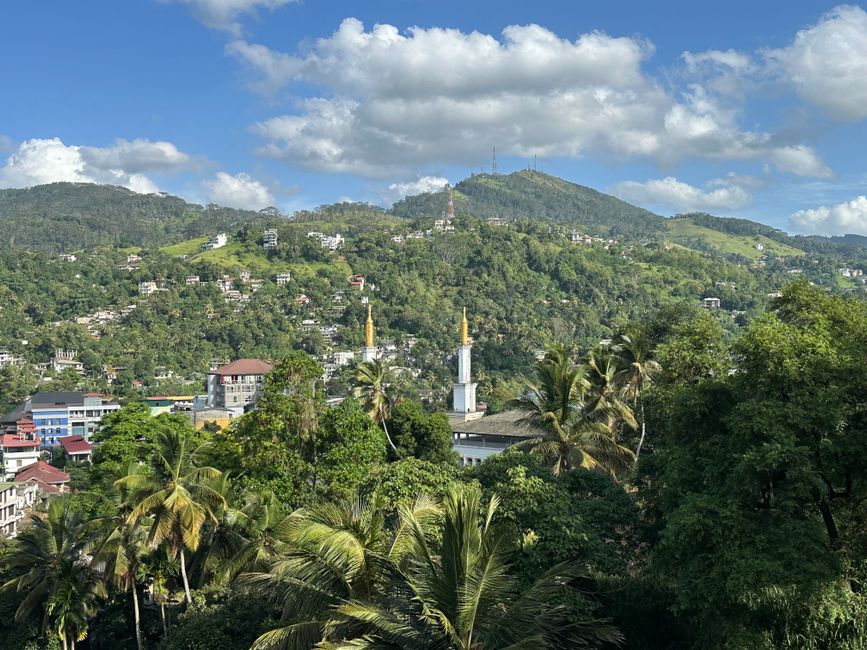
While tour buses queue up at the Temple of the Tooth in Kandy proper, the hill country villages scattered around Knuckles Range and beyond Hanthana Road exist in a different rhythm entirely.
In places like Madulkele, Rangala, and the tea villages above Deltota, you'll find yourself drinking wood apple juice on someone's porch, watching mist roll through cardamom plants, genuinely unsure what time it is. These aren't manicured cultural experiences—they're working villages where people still farm steep hillsides and walk red dirt paths to buy rice from small cooperative shops.
The magic here is in the specifics: eating lunch at a village home in Nilambe where the pol sambol was ground that morning and the jackfruit curry comes from the tree you can see from the table. Walking past the Thangappuwa Rajamaha Viharaya temple near Madugalla, where a single monk might invite you in for tea without ceremony. Hiking the unused colonial bridle paths above Uduwela that connect villages through pine forests and vegetable terraces, passing maybe three people in four hours. The landscape does something unusual to light here—the green isn't just green, it's about twelve different shades depending on whether you're looking at tea bushes, paddy fields, or the particular way sunlight hits a banana leaf.
The villages themselves rarely appear in guidebooks because there's not much to "do" in the conventional sense. No cooking classes with certificates, no craft workshops designed for foreigners. But if you stay in a home through someone like Mudith in Nilambe or the families around Galaha, you end up in the kitchen anyway, watching how they actually make string hoppers, walking to their tea plots at dawn, meeting their neighbours who want to practice English and ask surprisingly direct questions about your life. People here are curious about visitors precisely because they see so few, and that curiosity goes both ways.
Photo by Shifna Captures on Pexels
Why it's Unbeaten
Out of the main current, in the right way.
Most visitors to Sri Lanka's hill country stick to the triangle of Kandy, Nuwara Eliya, and Ella—hitting the same tea plantations, colonial hotels, and Instagram-famous Nine Arches Bridge. The villages scattered across Kandy's immediate highlands get overlooked because they lack a single marquee attraction or convenient tourist infrastructure. Travelers either rush through en route to somewhere else or don't realize these villages exist at all. What they miss is the actual rhythm of hill country life: genuine tea pickers' conversations, working farms where you can stay, and landscapes that feel genuinely untouched rather than curated for tourism.
The main event
What you'll actually do in and around Kandy's Hill Country Villages
01
Join a tea-picking morning in Matale District
Arrange through your accommodation or directly with a farm—arrive at 6:30 AM when pickers head to the fields. You'll pick leaves alongside workers earning daily wages, learning to distinguish the two young leaves and a bud that fetch premium prices. By 10 AM, watch your leaves move into the withering shed. It's genuinely humbling work and gives you visceral understanding of what's in your cup.
02
Hike to Hunnasgiriya (Rangala village)
A modest but rewarding hill walk starting from Rangala village, ascending through pine forests and grassland meadows to a ridgeline viewpoint overlooking the Kandy plain and distant mountains. Takes roughly 2 hours return; locals use it for evening strolls, so you'll see actual village life rather than tour groups. Pack water; there are no facilities on the trail.
03
Visit Embekke Devale (Embekke village)
An ancient wooden temple carved with intricate wooden pillars depicting dancing figures and mythological scenes—far less crowded than Kandy's Temple of the Tooth but equally impressive architecturally. The village itself is genuinely quiet; arrive early morning before any tour buses and sit with locals making offerings. Donation-based entry (500-1,000 LKR suggested).
04
Explore the Botanical Gardens at Peradeniya as a local would
Most tourists speed through, but locals come here for evening walks along the Mahaweli River paths. Go late afternoon (after 4 PM) when crowds thin, walk the back paths rather than the main loop, and sit by the river where you'll see fishermen and hear actual birdsong. The spice and herb sections are better studied slowly than rushed.
05
Cooking class in a village home
Arrange through your accommodation for a half-day session where a local woman teaches you to make curry, dhal, and rice using methods passed through family generations rather than cookbook shortcuts. You cook together, then eat what you've made. Much more intimate than commercial cooking schools; typically costs 3,000-5,000 LKR including ingredients.
06
Walk the backroads of Ampitiya or Gampola at dusk
These villages have no particular landmark but genuine atmosphere: schoolchildren returning home, farmers herding cattle, families preparing evening meals. Walk without agenda, greet people (Sinhala 'Ayubowan'), and you'll be invited for tea. Bring a phrasebook or translation app; these villages see few foreign visitors.
Taste of Kandy's Hill Country Villages
Where to eat
Hill country food centers on rice, curry (usually vegetable-heavy but with meat options), and dhal—staple comfort food rather than restaurant sophistication. What makes it worth eating is freshness and proportion: vegetables picked that morning, spice blends that vary family-to-family, rice cooked in ratio to curry. Tea is omnipresent and excellent. Avoid tourist-oriented restaurants in Kandy town; seek out local 'kudu' shops and village home meals instead. Bakeries selling lamprais (meat baked in pastry) and short eats like cutlets are ubiquitous and genuinely good. Most villages have simple roadside warung ('eating houses') where meals cost 400-800 LKR.
Warung near Rangala village center (unnamed—ask locals)A basic open-air eating shed serving curry and rice to workers and locals. Get there at midday, point to what others are eating, and pay under 500 LKR for a full plate of rice with 3-4 curries. No menu, no English, completely authentic—this is how locals actually eat.
New Araliya Restaurant (Kandy, near Peradeniya Bridge)Run by a retired hotel chef who serves Kandyan specialties: lamprais, deviled dishes, and hoppers that match what home cooks make. Order the jackfruit curry if in season; their lamprais is worth the trip alone. Moderate prices (800-1,500 LKR per dish), clean, and popular with local families rather than tourists.
Home meal at a village accommodationMost guesthouses and homestays will prepare evening meals if you request morning-of (2,000-3,000 LKR). This is often better than restaurant food: the cook is cooking for family, using home-garden vegetables, adjusting spice to your preference. Request specifically that they cook 'like for family, not tourists.'
02 / The honest read
Is Kandy's Hill Country Villages your kind of trip?
Best for
+ Slow travellers
+ Culture enthusiasts
+ Photographers
+ Families
+ Hikers
Think twice if you want
x Party seekers
x Beach lovers
x Luxury resort tourists
Effort and reward
Planning
3/5
Physical effort
2/5
Self-reliance
4/5
Scenery
5/5
Culture
4/5
Difficulty breakdown
What "3/10" actually means
Language barrier4/10
Limited English spoken in remote villages; translation apps and local guides are strongly recommended.
Logistics3/10
Local transport requires planning but well-established bus routes and tuk-tuks connect major villages.
Physical demand2/10
Village walks are gentle with moderate elevation changes suitable for most fitness levels.
Infrastructure2/10
Basic but adequate accommodation and simple restaurants; amenities are sparse compared to tourist hubs.
The hill country villages offer an accessible yet immersive alternative to mainstream Sri Lankan tourism, with manageable terrain and established local transport. Modest infrastructure and language challenges are easily overcome with basic preparation and local guidance, making this suitable for independent travellers seeking authentic cultural experiences.
Read this before booking
The honest caveats
Infrastructure in these villages is genuinely sparse: ATMs are scarce (bring cash from Kandy), pharmacies limited, and English-speaking staff almost nonexistent outside major hotels. If you're uncomfortable with basic facilities, limited communication, or the necessity of slow travel, stick to main routes. Roads are good but narrow and steep; if you're renting a car yourself, prepare for aggressive local driving habits and the reality that getting lost is easy and time-consuming. Several villages still have inconsistent electricity and water; power cuts aren't rare, and cold showers are common in budget accommodations. Tourist infrastructure is genuinely minimal—there are no tour operators hawking activities on corners, which is part of the appeal but also means you need to be self-directed and comfortable arranging your own meals and transport.
Safety & health
The Hill Country around Kandy is generally safe for tourists, with petty theft being the primary concern in crowded areas and on public buses. Violent crime against tourists is rare, but valuables should be secured and awareness maintained in busy markets. Roads in hill villages are winding and can be poorly lit at night; travel by day or use registered taxis. Health facilities in Kandy town are adequate, but serious medical emergencies may require evacuation to Colombo. Recommended vaccinations include typhoid, hepatitis A and B, Japanese encephalitis, and routine immunizations. Malaria risk is low in the Hill Country due to altitude, but dengue fever occurs year-round; use insect repellent and protective clothing. Water quality varies; drink bottled or boiled water in villages. Medical insurance covering evacuation is highly recommended for remote trekking.
Official advisoryLevel 3
Reconsider travel to Sri Lanka due to COVID-19 and exercise increased caution due to terrorism concerns.
Advisories change. Verify with the US State Department before travelling. Last reviewed: 2021.
03 / Make it real
Plan the trip
December–February (Southwest Dry Season)
Why go: Generally clear mornings, afternoon clouds but often clearing by evening. Ideal for hiking and tea-picking visibility. Cooler than lowlands (15-22°C), so walking is comfortable. Least rainfall overall.
Watch for: This is technically 'high season' so prices spike slightly and the few hotels get fuller. Still quiet relative to beach areas but marginally busier than other months.
May–September (Northeast Dry Season)
Why go: Second-best window with lower rainfall than surrounding months. June-July can be surprisingly pleasant. Far fewer tourists overall, so villages feel genuinely untouched. Accommodation prices are lowest.
Watch for: Afternoon thunderstorms are common, reducing visibility and hiking viability. Some days rain arrives mid-morning. Less predictable than Dec-Feb, but workable for flexible itineraries.
Why go: Spectacular green landscape, fewer tourists, agricultural activity is visible everywhere.
Watch for: Significant daily rainfall, often in late afternoon but sometimes sustained. Hiking becomes muddy and slippery. Mist obscures views. If you're looking for viewpoint photography, avoid these months.
Getting there
Getting there
Fly into Bandaranaike International Airport (Colombo), then take the train from Colombo Fort to Kandy (roughly 3 hours, scenic route along the rail corridor). From Kandy town center, minibuses and tuk-tuks serve the surrounding villages—negotiate fares beforehand (expect 800-2,000 LKR for a shared minibus). The final approach to villages like Matale district or beyond Kandy's immediate ring roads involves winding single-track roads; local drivers navigate these confidently, but if you're self-driving, assume 45 minutes to 90 minutes from Kandy center to reach the quieter villages deeper in the hills. Train from Colombo to Kandy is reliable and atmospheric; buses are cheaper but slower. Many smaller villages have no direct public transport—arrange pickups through your accommodation.
Visa & entry
Entry requirements
All US, UK, and EU citizens traveling to Sri Lanka must obtain an Electronic Travel Authorization (ETA) before arrival. The ETA is a mandatory online visa requirement valid for 180 days from issuance, permitting single visits of up to 30 days. Citizens can apply online through the official Sri Lanka ETA system; processing typically takes 24-48 hours, with expedited options available. Alternatively, visa on arrival may be available at the airport if the ETA application is unavailable, though this may incur additional fees and delays. All passports must be valid for a minimum of 6 months beyond the intended date of entry into Sri Lanka.
PassportRequirementMax stayDetails
USe-Visa (ETA)30 days per visitValid for 180 days from issuance; double entry permitted. Visa on arrival possible but may incur extra fees.
UKe-Visa (ETA)30 days per visitValid for 180 days from issuance; double entry permitted. Passport must be valid 6 months beyond arrival.
EUe-Visa (ETA)30 days per visitValid for 180 days from issuance. Fees may vary slightly by nationality. Passport must be valid 6 months beyond arrival.
Requirements may change. Confirm with the relevant embassy or official immigration authority before booking.
Daily budget
What it costs once you're there
USD per person/day, double occupancy, excluding international flights (2026-06-16)
Budget$75Includes lodging $20, food $20, activities $25, local transport $10. Lodging anchored to Plantation House (Matale District). medium confidence
Midrange$160Includes lodging $40, food $40, activities $60, local transport $20. Lodging anchored to The Hill Station (Kandy outskirts, Ampitiya). medium confidence
Splurge$270Includes lodging $20, food $70, activities $130, local transport $50. Lodging anchored to Peradeniya Village Homestay (Peradeniya). medium confidence
Base yourself well
Where to stay
Search live availability
Use the curated stays below as a starting point, then compare current inventory and prices.
Run by a third-generation tea farming family, this guesthouse sits within an active plantation where you can join morning picking if you arrive early. Rooms are simple and clean, with views across terraced fields; the owner provides breakfast using produce from the property and genuinely enjoys sharing how tea is processed. It's more authentic than comfortable—no frills, basic WiFi—but you're literally living on a working farm.
Self-catering cottage$50-90/night
Kandy View Estate Bungalow
A restored colonial-era bungalow nestled above the Kandy Plain with sweeping views toward the city. It sleeps 4-6, comes with a basic kitchen, and the caretaker can arrange meals. Ideal if you want base-camp independence while being close enough to villages for day exploration.
Family-run B&B$40-70/night
Peradeniya Village Homestay (Peradeniya)
A genuine family home in Peradeniya village where the owner, a retired schoolteacher, hosts 2-3 guests in a comfortable room. Breakfast includes hoppers and local curry; the owner offers informal village walks and introductions to neighbors. Honest, unpretentious, and you'll leave knowing the actual place rather than a tourist construct.
Boutique hotel$80-150/night
The Hill Station (Kandy outskirts, Ampitiya)
A step up in comfort without losing character—a restored Victorian-era property with period furnishings, reliable hot water, and attentive service. Good middle ground if you want some creature comforts while exploring the quieter villages nearby. Restaurant on-site serves both local and international dishes.
Language, useful phrases, and cultural notes +
Sinhala / English: Moderate
Some English spoken in tourist areas, hotels, and restaurants - limited elsewhere. Translation app useful as a backup
Dress modestly when visiting temples and cultural sites; remove shoes when entering sacred spaces and cover shoulders and knees. Buddhists highly revere the Buddha and dagobas; never point at religious statues or touch them. The right hand is preferred for greeting, eating, and giving/receiving items; the left hand is considered unclean. Always show respect to elders and monks.
HelloAyubowanAh-yoo-bow-wahn
Thank youBohoma istutiBow-ho-mah ees-too-tee
How much?Kiyadha?Kee-yah-dah
Where is...?...kö koheda?...ko ko-hay-dah
Excuse meSamavennaSah-mah-wen-nah
04 / Keep going
Nearby & beyond
30 minutes by car
Peradeniya Royal Botanical Garden
Explore one of Asia's finest botanical gardens with stunning hill country views and colonial heritage plantings.
45 minutes by car
Temple of the Tooth Relic (Kandy)
Visit Sri Lanka's most sacred Buddhist shrine set beside Kandy Lake in the vibrant cultural heart of the island.
2 hours by car
Nuwara Eliya
Experience a charming colonial hill station with cooler mountain climate, tea plantations, and British-era architecture.
Map data OpenStreetMap contributors
Coordinates6.9271, 80.7789Filed under
naturecultureteahikingmountainsreligious sites
Not ready to book?
Keep Kandy's Hill Country Villages on your shortlist.