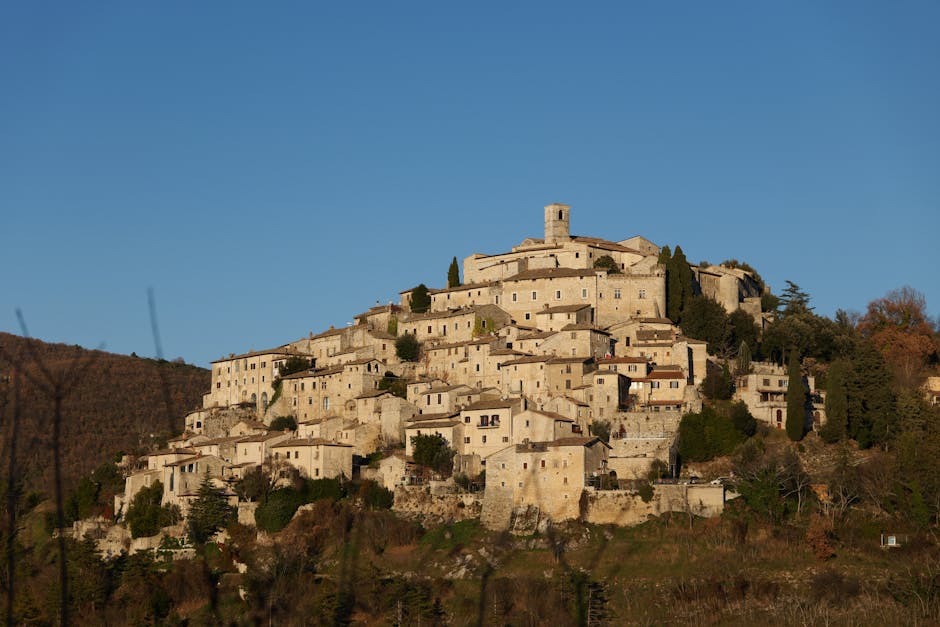
Cetona sits in that sweet spot between Val d'Orcia and Valdichiana where Tuscany hasn't been packaged and sold quite yet.
This medieval hill town has somehow dodged the tour bus circuit despite having everything those crowded villages have—stone streets that climb upward in lazy spirals, a proper piazza where locals actually gather, and that particular quality of light that makes you understand why Renaissance painters obsessed over these landscapes. The difference? You might be the only foreigner at Osteria del Merlo on a Tuesday night, working through their seasonal menu while regulars argue about football at the next table.
What draws the few travelers who do find their way here is an unexpected depth. The Museo Civico di Cetona holds genuine archaeological treasures from prehistoric caves in the surrounding hills—evidence that people have been drawn to this mountain for thousands of years. The town spreads down from a 10th-century fortress, and there's a legitimate network of water sources flowing through the area, including thermal springs that locals have used for centuries to treat everything from stress to liver complaints. It's not spa-resort polished; it's the real thing.
Piazza Garibaldi forms the town's beating heart, a proper Italian square where the rhythm of daily life plays out without performance. You can spend an afternoon here with an espresso, watching how a place actually works when it exists for itself rather than for visitors. The surrounding Val di Chiana countryside unfolds in every direction—working farms, olive groves, the kind of views that don't need a filter. People who make it to Cetona tend to feel like they've been let in on something, like they've found the Tuscany they'd imagined but had started to believe didn't exist anymore.
Photo by Bogdan Giurca on Pexels
Why it's Unbeaten
Out of the main current, in the right way.
Cetona sits in the shadow of Tuscany's headline acts—Siena, Montepulciano, and the Val d'Orcia get the postcards and the crowds. Most travellers stick to the A-list villages, treating Tuscany like a checklist rather than a place to actually settle into. What they miss is a village that's genuinely lived-in, where the piazza is filled with locals playing cards rather than tourists taking selfies. Cetona punches well above its weight: it has archaeology, thermal springs, excellent food, and a medieval core that hasn't been sanitised into a boutique shopping district. It's the kind of place where you can eat exceptionally well, move slowly, and actually have conversations with people who live there.
The main event
What you'll actually do in and around Cetona
01
Museo Civico di Cetona
An elegant, well-curated museum covering local archaeology and Etruscan finds—the kind of regional museum that locals actually care about rather than a tourist obligation. The collection reflects genuine community heritage, and it's never crowded. Spend 90 minutes here if you're interested in prehistory and medieval history.
02
Parco Nazionale della Val d'Orcia thermal springs and hiking
The area sits atop geothermal activity; Rapolano Terme (nearby) and the lesser-known thermal pools around Cetona offer therapeutic waters. Beyond spas, the countryside is laced with walking trails through cypress groves and Sienese hills. Even a modest 2-hour walk reveals why painters and writers came here.
03
Piazza Garibaldi and village wander
The heart of Cetona is genuinely charming—a working piazza where locals congregate, flanked by medieval architecture and decent restaurants. There's no 'tourist circuit' here; you're simply walking through a place people actually live. Aim for late afternoon when the light is golden and the locals emerge for aperitivos.
04
Drive or bike through Val d'Orcia
Rent a car or mountain bike and explore the surrounding valleys. The roads are quiet, the views are cinematic, and you'll pass small churches and farmhouses that don't appear in guide books. This is where you understand why Tuscany captured people's imagination.
05
Visit nearby Montepulciano or Pienza as day trips
Both villages are within 30–40 minutes by car. While more famous and busier than Cetona, they're worth the drive for their Renaissance architecture and food specialities. Treat them as excursions rather than destinations, and return to Cetona's quiet for dinner.
06
Buy wine and olive oil directly from local producers
Several farms around Cetona sell directly to visitors—far better value and quality than bottles in tourist shops. Ask your accommodation to point you toward family producers; you'll often get a tour and tasting included. This is how locals stock their kitchens.
Taste of Cetona
Where to eat
Cetona's food culture is built on Sienese tradition and seasonal ingredients—think pici pasta, wild boar, pecorino cheese, and Brunello wine. There's no molecular gastronomy or fusion here; the kitchen philosophy is 'good ingredients, light hand, respect the tradition.' Restaurants source from nearby producers, and menus change with the season. This isn't a place to hunt for Instagram-worthy plates; it's a place to eat genuinely well without pretension.
Osteria del MerloTraditional Tuscan cooking using seasonal, local ingredients—pici with wild boar ragù, roasted meats, and local cheeses done properly. Located on Piazza Garibaldi, it's where locals eat, and the owner knows the region intimately. Book ahead, especially weekends. This is essential eating.
Local produce market and delisThe village has a small alimentari (grocery shop) and weekly market where you can buy excellent pecorino, cured meats, bread, and wine. Assemble a picnic and eat on a hillside overlooking the Val d'Orcia—often better than a sit-down meal and considerably cheaper.
02 / The honest read
Is Cetona your kind of trip?
Best for
+ Slow travellers
+ History and archaeology enthusiasts
+ Wine lovers
+ Couples seeking quiet retreats
+ Artists and writers
+ Wellness and spa travellers
+ Families seeking cultural immersion
Think twice if you want
x Nightlife seekers
x Beach travellers
x Large group party travellers
x Budget backpackers (limited budget accommodation)
x Travellers requiring heavy English language support
Effort and reward
Planning
2/5
Physical effort
2/5
Self-reliance
3/5
Scenery
5/5
Culture
4/5
Difficulty breakdown
What "3/10" actually means
Language barrier4/10
English is spoken in hotels, restaurants, and tourist information; menus often have English translations, but village shopkeepers may speak only Italian.
Logistics3/10
Cetona is small and walkable on foot; regional buses connect to larger towns, but a car is recommended for accessing nearby attractions efficiently.
Physical demand2/10
Village exploration involves gentle hillside walking; no strenuous hikes required unless seeking thermal springs or countryside trails.
Infrastructure2/10
Reliable electricity, strong mobile coverage (4G/5G), good accommodation range, and well-maintained roads; no infrastructure surprises.
Cetona presents minimal logistical challenge for independent travellers. The village is compact, safe, and well-equipped for tourism. Main challenges are language (basic English in services) and car dependency for visiting surrounding Val d'Orcia attractions. Physical demand is low; this suits all fitness levels. Best suited to relaxed, self-directed exploration rather than adventure tourism.
Read this before booking
The honest caveats
Cetona is small—the piazza and a few surrounding streets comprise the actual 'village' worth spending time in. If you're looking for significant shopping, nightlife, or a sprawling array of attractions, you'll be disappointed. Summer heat is genuine and relentless; July and August can be uncomfortably hot, and many visitors find the pace too slow or the village too quiet. English isn't widely spoken beyond hotels and restaurants, so basic Italian or patience with translation apps is essential. The surrounding countryside, while beautiful, demands either a car or a willingness to walk; it's not as easily explorable on foot as more compact villages. Some travellers expecting more obvious tourism infrastructure (multiple cafés, activity booking centres, English menus everywhere) will find Cetona feels almost too 'undiscovered'—which is exactly why it's worth visiting, but it's worth knowing what you're getting.
Safety & health
Cetona is an exceptionally safe destination with virtually no violent crime or petty theft targeting tourists. The village is well-policed and welcoming. Standard European health precautions apply: no vaccinations are mandatory, but ensure tetanus, hepatitis A, and routine immunizations are current. The Italian healthcare system is world-class; Montepulciano (20 km away) has a modern hospital. Tap water is safe and of excellent quality. Summer heat (July–August regularly exceeds 35°C/95°F) requires sunscreen, hydration, and midday rest during outdoor activities. No malaria or tropical diseases present. Travel insurance is strongly recommended for comprehensive medical coverage and trip cancellation protection.
Official advisoryLevel 1
Italy is a safe travel destination with no significant security concerns for tourists.
Advisories change. Verify with the US State Department before travelling. Last reviewed: 2026.
03 / Make it real
Plan the trip
April–May (Spring)
Why go: Wildflowers in the fields, moderate temperatures, local spring festivals, restaurants not yet overwhelmed, excellent for hiking and cycling
Watch for: Variable weather, occasional rain, some rural accommodation may not yet be fully open
September–October (Early Autumn)
Why go: Harvest season (grapes, olives), warm days with cool mornings, dramatic evening light, local wine festivals, fewer tourists than summer, countryside at peak beauty
Watch for: Some very warm days, wine season means some agritourismos may be busy
June–August (Summer)
Why go: Reliable weather, longest daylight, all venues open, excellent for swimming and thermal springs, warm nights for dinner outside
Watch for: Very hot midday (35°C+), some crowds especially in nearby towns, need to plan around heat (long siesta breaks)
Getting there
Getting there
Fly into Rome (Fiumicino) or Florence (Peretola), both roughly 2 hours away by car. Train is feasible: aim for Chiusi-Chianciano Terme station (30km away), then rent a car or take a local bus—this route is slower but more atmospheric. From Rome, the drive north is straightforward on the A1 and A2, roughly 2.5 hours; from Florence, head south on the SR2 (Strada Regionale), about 1.5–2 hours depending on traffic. The final approach to Cetona is on regional roads through rolling Sienese countryside, which is part of the appeal. Once there, you'll need a car to explore the thermal springs and countryside effectively—parking in the village itself is tight but manageable.
Visa & entry
Entry requirements
US citizens do not require a visa to visit Italy for stays of up to 90 days within any 180-day period under the Schengen visa waiver agreement. Your US passport must be valid for at least 6 months beyond your planned departure date. From late 2025 or 2026 onwards, US citizens will need to register via ETIAS (European Travel Information and Authorisation System) before travel—a simple online process similar to the US ESTA, costing €7 and valid for 3 years.
UK and other EU citizens also enjoy visa-free travel to Italy for up to 90 days in any 180-day period as part of the Schengen Area. British citizens must carry a valid British passport or certificate of entitlement when returning to the UK. EU nationals traveling within the Schengen zone typically do not require a visa, though entry rules remain consistent year-round.
Border control may request proof of sufficient funds, onward travel, and accommodation, though checks for tourists from low-risk countries are usually minimal. As of October 12, 2025, the EU's biometric Entry/Exit System (EES) began phased rollout, registering non-EU travellers' fingerprints and facial images at the border.
PassportRequirementMax stayDetails
USVisa-free90 days in any 180-day periodPassport must be valid for at least 6 months beyond departure. ETIAS registration required from late 2025/2026. Official portal
UKVisa-free90 days in any 180-day periodValid British passport required. Must carry valid British passport when returning to UK. Official portal
EUVisa-freeUnrestricted for EU citizensEU nationals enjoy freedom of movement within Schengen zone. No visa required. Official portal
Requirements may change. Confirm with the relevant embassy or official immigration authority before booking.
Daily budget
What it costs once you're there
USD per person/day, double occupancy, excluding international flights (2026-06-16)
Budget$80Includes lodging $25, food $20, activities $25, local transport $10. Lodging anchored to Cetona Rooms. medium confidence
Midrange$150Includes lodging $30, food $40, activities $60, local transport $20. Lodging anchored to Agriturismo Poggio Pinelli. medium confidence
Splurge$300Includes lodging $50, food $70, activities $130, local transport $50. Lodging anchored to Hotel Cetona. medium confidence
Base yourself well
Where to stay
Search live availability
Use the curated stays below as a starting point, then compare current inventory and prices.
Stone farmhouse with views across the Val d'Orcia, a working farm that produces wine and olive oil. Breakfast includes their own products, and the owners are genuinely knowledgeable about local walking routes. This is rural Tuscany done right—quiet, unpretentious, and grounded.
Guesthouse$50–80/night
Cetona Rooms
Simple, clean rooms above a local bar in the village centre, putting you steps from restaurants and the piazza. No frills, but authentic village living and excellent value. You'll wake to the rhythm of actual local life.
Boutique hotel$100–160/night
Hotel Cetona
Mid-range option with character, featuring restored stone rooms and a small wellness area with access to nearby thermal facilities. Central location with better amenities than the guesthouses, without feeling corporate.
B&B$70–120/night
La Locanda di Cetona
Charming converted palazzo in the old town with period details and modern comfort. Owner-run, with genuine recommendations for lesser-known local spots. Good middle ground between personality and comfort.
Language, useful phrases, and cultural notes +
Italian / English: Basic
Simple tourist phrases only in hotels and main attractions - most locals speak no English. Translation app strongly recommended
Italians value respectful formality; use 'Lei' (formal you) with strangers and service staff until invited to use 'tu' (informal). Meal times are sacred—lunch 1–3 PM, dinner 8–10 PM; many shops close 1–4 PM. Sunday is still observed as a rest day in villages; fewer services operate. Greet shopkeepers and neighbours with 'Buongiorno' or 'Buonasera' before speaking.
HelloCiao / BuongiornoCHOW / bwon-JOR-no
Thank youGrazieGRAH-tsee-eh
How much?Quanto costa?KWAN-toh KOS-tah
Where is...?Dov'è...?do-VEH
Excuse meScusi / PermessoSKOO-zee / per-MESS-oh
04 / Keep going
Nearby & beyond
20 km / 25 minutes by car
Montepulciano
Renaissance hilltop town famous for Vino Nobile wine, architectural masterpieces, and panoramic views across Val d'Orcia.
28 km / 35 minutes by car
Pienza
UNESCO-listed Renaissance village with architectural harmony, artisan cheese shops, and dramatic countryside vistas.
15 km / 20 minutes by car
Val d'Orcia
UNESCO World Heritage landscape of rolling hills, cypress rows, and medieval villages including Radicofani and San Quirico d'Orcia.
12 km / 15 minutes by car
Chianciano Terme
Thermal spa resort town with curative hot springs (sulfurous waters for liver and digestive health) and modern wellness facilities.
60 km / 1 hour 15 minutes by car or bus
Siena
Medieval masterpiece with the Palio horse race, Gothic cathedral, and maze of contrade streets; one of Italy's most atmospheric cities.