Overview
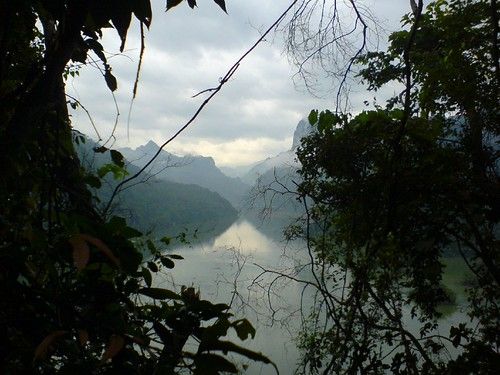
Bac Kan is what northern Vietnam looked like before the tour buses figured it out. This sleepy provincial capital sits wedged between limestone karsts and Ba Be National Park, Vietnam's largest natural lake, and somehow remains gloriously ignored by the Hanoi-Sapa-Ha Long circuit. The town itself is just wide enough for a morning walk—Truong Chinh Street cuts through the center past local noodle joints where you'll be the only foreigner slurping bun ca re (snakehead fish noodle soup) at 7am. The real magic is Ba Be Lake, about an hour's motorbike ride northwest. Forget Ha Long Bay's junk boat selfie factories—here you'll board a wooden boat with maybe three other people, glide past Tay and Dao villages built on stilts, and drift into Puong Cave where the only sound is water dripping and bats overhead. The Nang River feeds into the lake through a series of waterfalls at Dau Dang that you can walk right up to, no ticket booth or safety railing in sight. Stay in Pac Ngoi village and your homestay host will probably be up making rice wine before you wake. Travellers who make it here tend to feel like they've stumbled onto something they shouldn't tell too many people about. There's no English signage to hold your hand, no banana pancakes or happy hour specials, just a functioning Vietnamese town that happens to sit next to extraordinary nature. The roads are empty enough that you'll pull over just to watch the mist burn off the mountains. You came to Vietnam for this feeling, you just didn't know you'd find it in Bac Kan.
Why It's Unbeaten
Bac Kan sits in the blind spot between Vietnam's two major tourist circuits. Most travellers rush from Hanoi northward to Sapa for trekking, or south to Halong Bay for cruises. Bac Kan offers something genuinely different—limestone karsts, pristine lakes, and ethnic minority villages—but lacks the infrastructure marketing that pulls crowds to those destinations. The result is a province where you'll encounter far more locals than foreigners, where guides aren't jaded, and where you're not competing with tour buses for viewpoints. It's the kind of place that existed as a proper travel experience five years ago, before mass tourism homogenized it.
The U.S. Department of State has raised the Travel Advisory for Vietnam to Level 4: Do Not Travel.
Advisory based on knowledge as of 2025. Always check travel.state.gov for the most current information.
Who Is This Trip For?
Recommended age range: All ages
Ages All ages
✓ Families seeking gentle adventure
✓ Slow travellers and nature lovers
✓ Photographers and landscape enthusiasts
✓ Cultural explorers interested in ethnic minorities
✓ First-time visitors to northern Vietnam
✗ Party-focused travellers
✗ Beach holiday seekers
✗ Travellers with limited mobility
✗ Those seeking nightlife or high-end luxury
Getting There
The nearest major airport is Noi Bai in Hanoi, roughly 240km south. From there, take a bus or hire a driver for a 4-5 hour journey north. Open Tour buses run this route daily (around $8-12), but they're slow and make multiple stops. A better option is hiring a private driver from Hanoi (negotiate $30-40 for the day), which gives you flexibility and a chance to stop at interesting points along Highway 3. Alternatively, take a bus directly from Hanoi's Giap Bat station to Bac Kan city (4 hours, $6-8). The final 20km to most attractions requires a motorbike or hired car—taxis from the city are unreliable, so arrange transport through your accommodation.
Budget Guide
Budget
$35USD / day≈ 918,387 VND
Budget accommodation in guesthouses ($8-12/night), street food and local meals ($3-5/meal), local transport ($2-3/day), and basic activities.
Midrange
$75USD / day≈ 1,967,971 VND
Mid-range hotel ($25-40/night), mix of restaurant and street food ($8-12/day), tours and activities ($15-20/day), local transport.
Splurge
$150USD / day≈ 3,935,943 VND
3-4 star hotel or resort ($50-80/night), quality dining experiences ($30-40/day), guided tours and premium activities ($30-40/day), private transport options.
* USD amounts are approximate. Exchange rates refresh hourly via Frankfurter.
Visa & Entry
US citizens require a visa to enter Vietnam, which can be obtained via e-Visa, visa on arrival, or through the Vietnamese embassy/consulate. The e-Visa is the most popular option for US travelers, processed online in 1-3 business days with a standard fee of $25 USD. UK and most EU citizens benefit from Vietnam's expanded visa-exemption policy. Starting August 15, 2025, citizens of 12 additional European countries gained visa-free entry for up to 45 days, joining the previous 12 visa-exempt countries. EU citizens should verify their nationality on Vietnam's official visa exemption list, as coverage has expanded significantly through 2025. All travelers should ensure their passport is valid for at least 6 months beyond their intended stay.
US
e-Visa or Visa on Arrivale-Visa is recommended for US citizens. Visa on arrival also available at Vietnamese ports of entry.
Apply:Vietnam e-Visa Portal →
UK
Visa-freeUK citizens have visa-free entry as of July 2015, extended through 2028.
Apply:Vietnam Government
EU
Visa-free (most countries)24 EU countries now have visa-free access as of August 15, 2025. Belgium, Bulgaria, Croatia, Hungary, Luxembourg, Netherlands, Romania, Slovakia, Slovenia added in August 2025; Switzerland, Czechia, Poland as of March 2025. Verify your specific nationality on official lists.
Apply:Vietnam Government
Visa requirements are based on publicly available information and may have changed. Always confirm with the official embassy or consulate before travelling.
Where to Stay
Search for accommodation
The properties below are curated suggestions. You can also search directly on a booking platform.
Note on contact information: Where available, contact details are sourced from publicly available records and may be out of date.
Run by a local family with genuine hospitality, this place sits directly overlooking Bac Kan Lake with views of the karst cliffs at sunrise. Simple rooms, no frills, but the owner speaks basic English and can arrange boat trips and village visits. Breakfast—usually pho and fresh fruit—is included and genuinely good.
Contact details unavailable — try searching online or a booking site.
Search "Bac Kan Lake View Homestay" on Booking.com →The most reliable option in Bac Kan city with clean rooms, reliable hot water, and air conditioning. Staff are helpful despite limited English. It's centrally located for accessing restaurants and the market, though it lacks character. Useful as a base if you want comfort but don't need luxury.
Contact details unavailable — try searching online or a booking site.
Search "Ngo Nguyen Hotel" on Booking.com →Located within the park itself, this government-run guesthouse puts you in the heart of the action with immediate access to hiking trails and the lake. Rooms are basic but clean, and staying here means you can start activities early before day-trippers arrive. The staff can arrange guided treks to ethnic villages, though book in advance.
Contact details unavailable — try searching online or a booking site.
Search "Ba Be National Park Guesthouse" on Booking.com →A newer option near Hang Pagoda with bungalows set among forest. More upmarket than other options, with solar power and sustainable practices. Good for travellers wanting comfort with a lighter environmental footprint, though it's still developing and can feel isolated.
Contact details unavailable — try searching online or a booking site.
Search "Hang Pagoda Ecolodge" on Booking.com →What to Do
Paddle a traditional wooden boat or kayak across Vietnam's largest freshwater lake, surrounded by 500m limestone cliffs. Stop at Hang Puong cave (the cave you can paddle through) and visit Hang Dau Dang waterfall. Go early morning when the light is sharp and you'll likely have the lake mostly to yourself—the karst reflections are genuinely stunning.
Hire a local guide (essential for respectful visits) and spend 4-6 hours trekking to villages like Na Hang or Pac Ngoi where Tay people still live traditionally. You'll see stilt houses, meet families, and understand how life works here beyond the tourist gaze. Guides can arrange homestays if you want to stay overnight—eating with a family and learning to cook local food is worth the modest extra cost.
A 6km loop around the smaller Bac Kan Lake (not Ba Be) near the city offers unbeaten views of limestone peaks reflected in still water, especially at sunset. The path is quiet, crosses through local farmland, and gives you a genuine sense of the landscape. Bring water and start late afternoon; locals use it as an evening exercise route so you won't be alone in a way that feels unsafe.
Combine a visit to the remote Hang Pagoda (built inside a limestone cave with views over karsts) with the nearby Ban Gioc waterfall, one of Vietnam's most spectacular. Both require a guide and 5-6 hours, but you'll see dramatic geology and very few other tourists. The waterfall is shared with the China border, adding geographic interest.
Arrive at the city market by 6am when it's at full energy—local farmers sell produce, meat, and prepared foods. It's a genuine working market, not a tourist attraction, so you'll see actual daily life and can buy fresh ingredients or eat excellent pho from stalls for $1-2. Photography requires respect; ask before shooting.
Hire a motorbike and ride the scenic loop through Ngan Son district, passing limestone plateaus, rice paddies, and small settlements. The roads are good, the scenery changes constantly, and you can stop at viewpoints and village cafes without a guide dictating the pace. Takes 4-5 hours depending on stops.
Where to Eat
Bac Kan's food is purely northern Vietnamese with strong Tay ethnic influences—expect fresh herbs, simple preparation, and fish from the local lakes and rivers. The food culture here is about using what's available, not about presentation or innovation. Street food is excellent and cheap ($1-3 per dish). Seek out anything featuring freshwater fish (ca), wild herbs (rau), and sticky rice cooked in bamboo. Restaurant dining is limited; your best meals will either be from street stalls in the market or arranged through your homestay.
Skip the city restaurants entirely and eat breakfast where locals do. The pho is made fresh daily from proper stock, and the fish cakes are grilled to order. Sit at plastic stools, point at what looks good, and expect to pay $1-2 for a substantial meal. This is unbeaten-path eating at its most genuine.
Arrange dinner with your guesthouse family—they'll cook local specialties like grilled freshwater fish with herbs, bamboo shoots, and sticky rice. Cost is usually $3-5 per person and you eat with the family, not as a tourist customer. This is worth prioritizing over any restaurant in the city.
Look for small stalls (no English signs) serving com tam with grilled pork, fried egg, and pickled vegetables. It's a working lunch for locals and costs about $1.50. The broken rice has a different, slightly nutty texture than regular rice—worth trying specifically for that reason.
Language & Culture
Official Language
Vietnamese
English Spoken
Basic
Simple tourist phrases only in hotels and main attractions — most locals speak no English
📱 Translation app strongly recommended
Cultural Tips
Respect for elders and authority is paramount in Vietnamese culture; avoid raising your voice or showing disrespect. Remove shoes when entering temples, homes, and some restaurants, and ask permission before photographing people or religious sites. A smile and attempts at Vietnamese greetings go a long way in rural areas where English is limited; the local population is friendly and patient with travellers.
Useful Phrases
Safety & Health
Bac Kan is a very safe destination with low crime rates and a welcoming local population; standard urban precautions (avoid displaying valuables, secure your belongings) are sufficient. Petty theft is rare. Roads are well-maintained but driving can be chaotic; use licensed taxis or hire a driver rather than self-driving if unfamiliar with Southeast Asian traffic. Healthcare facilities in Bac Kan town are basic; serious injuries or illnesses may require evacuation to Hanoi (3–4 hours away), so comprehensive travel insurance is essential. Vaccinations for Japanese encephalitis, hepatitis A/B, typhoid, and tetanus are recommended; malaria risk is low in Bac Kan but prophylaxis may be advisable during rainy season in remote areas. Tap water is not potable; drink bottled or filtered water only. Insect repellent and sun protection are necessary year-round.
Best Time to Visit
Visit between October and April, when skies are clear and temperatures are cool. The dry season offers the best visibility for karst views and makes hiking genuinely pleasant rather than a sweaty endurance test.
✓ Clear skies, cool temperatures (15-22°C), minimal rain, excellent visibility of limestone cliffs. This is peak season for a reason—light is sharp, water levels are stable for boating, and hiking is comfortable.
✗ It's the most popular time, so you'll encounter more tourists (though still far fewer than Sapa). Accommodation fills up on weekends.
✓ Cold, dry weather (8-15°C) with occasional frost at higher elevations. Fewer tourists, clear views, and an authentic feel to the place. Bring proper layers—it's surprisingly chilly.
✗ Some guesthouses have unreliable heating. Morning mist can obscure views until late morning. Occasional cold rain can make hiking slippery.
✓ The landscape is impossibly green, the lakes are full, and waterfalls are dramatic. Tourist numbers drop significantly, so you get genuine solitude. Least crowded time overall.
✗ Heavy rain makes roads muddy and some hiking trails slippery or impassable. Cloud cover reduces visibility of karsts. Humidity is intense. Cave visits can be cancelled if water levels rise. This requires flexibility and resilience.
Honest Caveats
Bac Kan has real limitations. English is genuinely scarce—most people speak zero English, and even your guesthouse owner may only manage basics. Translation apps help but aren't perfect. Tourist infrastructure is minimal; there are no organized tour operators offering pre-packaged experiences (which is partly why it's unbeaten, but also means you need to be self-directed or hire guides privately). Road conditions outside the city are variable—some routes have potholes and are slow going. Motorcycles are the transport of choice for locals, and if you're not confident riding, you're dependent on hired drivers or tours, which limits flexibility. The rainy season (May-September) makes roads genuinely slippery and some activities (especially cave visits) less appealing. Finally, be prepared for the fact that this is still a developing region—accommodation is basic, hot water is inconsistent, and internet is spotty. If you need comfort and predictability, go to Sapa.
Difficulty Breakdown
Overall
3/10
Easy
Language Barrieri
4/10
Easy
Logisticsi
3/10
Easy
Physical Demandi
2/10
Very Easy
Infrastructurei
2/10
Very Easy
What This Means
Bac Kan is highly accessible for families and first-time travellers to Vietnam. Hiking and cave exploration are gentle and safe, roads and guesthouses are comfortable, and English-speaking staff are available at all tourist-oriented businesses. The main challenge is the language barrier in rural areas, mitigated by translation technology and local hospitality. No visa complications, no health hazards beyond standard tropical precautions, and no security concerns make this an ideal low-stress introduction to northern Vietnam.
Nearby Destinations Worth Combining
Click any destination to see why it pairs well with Bac Kan.
Location
Map data © OpenStreetMap contributors