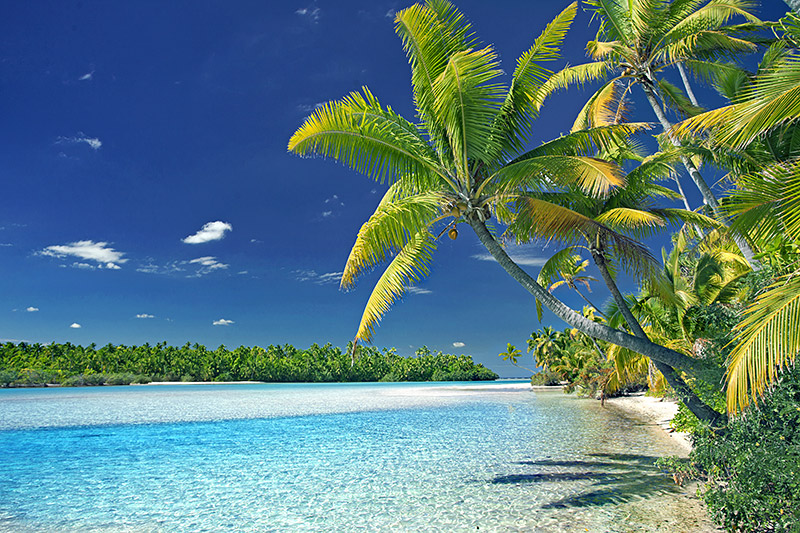
Photo by Mr Bullitt, CC BY-SA 3.0 <http://creativecommons.org/licenses/by-sa/3.0/>, via Wikimedia Commons on Unsplash
Best timeApr-Oct
Suggested stay4-5 nights
Budget from$80/dayPer person, double occupancy
Trip difficultyVery Easy2/10 overall
Unbeaten score8/10Easy, still overlooked
01 / The pitch
Aitutaki isn't hiding from tourists — it's just that most people stop at Rarotonga and never make the 50-minute hop to what might be the most absurdly beautiful lagoon in the Pacific.
Their loss. This is a place where the water shifts through impossible shades of blue and turquoise, where One Foot Island sits like a castaway's fantasy with its tiny post office box (yes, you can mail a postcard from one of the world's most remote postal outposts), and where the resident population of 1,800 means you'll quickly start recognizing faces at the Arutanga wharf.
The island works on a gentle rhythm that rewards slowness. Rent a scooter and loop the main island in an hour, stopping in villages like Vaipae and Tau'tu on the quieter southeast side, where life unfolds without much concern for visitor schedules. Climb Maunga Pu for a bird's-eye view that reveals the full geometry of the lagoon — the scattered motus, the reef edge, the gradient of blues that photographs never quite capture honestly. The snorkeling off One Foot Island, past the rock ledge toward the reef, delivers the kind of underwater clarity that makes you forget you're breathing through a tube.
Most accommodation clusters around Amuri in the north, keeping a respectful distance from village life while positioning you perfectly for lagoon access. The Aitutaki Lagoon Resort sits on its own island, Akitua, and even if you're not staying there, a day pass gets you onto Flying Boat Beach with a drink in hand, watching the light do things to the water that feel genuinely theatrical. Island nights offer a taste of local culture without the performance feeling manufactured. This is the South Pacific before the world discovered it needed to be packaged — travelers who find their way here tend to guard the secret jealously, and now you'll understand why.
Photo by Julius Silver, CC BY-SA 4.0 <https://creativecommons.org/licenses/by-sa/4.0>, via Wikimedia Commons on Unsplash
Why it's Unbeaten
Out of the main current, in the right way.
Aitutaki sits in the shadow of Rarotonga, the Cook Islands' main island, and most casual travellers never make the 45-minute flight required to get here. While Rarotonga has infrastructure and gets the cruise ship crowds, Aitutaki remains genuinely quiet — a place where you can spend a day on One Foot Island without fighting for sand. The lagoon here is arguably more stunning than Rarotonga's: impossibly clear turquoise water, a proper atoll system with multiple islets, and snorkelling that doesn't require a boat ride to be worthwhile. Tourism hasn't been industrialised here; there are no resorts with 200 rooms, no nightlife strips, just a handful of family-run lodges and a pace of life that makes you actually feel like you've left somewhere.
The main event
What you'll actually do in and around Aitutaki
01
One Foot Island lagoon and postbox
A true bucket-list moment: wade through turquoise shallows to a tiny islet with a post office box — one of the world's most remote. The snorkelling around the reef ledge here is genuinely good, and the sand is powder-fine. Go early to avoid day-trippers from Rarotonga.
02
Lagoon snorkelling and boat tours
The lagoon is the main event. Rent a small boat or join a guided tour to explore the outer reef, spot reef sharks and rays, and drift-snorkel in gin-clear water. The coral and fish life are exceptional compared to heavily trafficked tourist snorkel spots elsewhere in the Pacific.
03
Maunga Pu summit walk
The island's highest peak offers panoramic views across the entire atoll system. It's a short, steep walk that takes maybe 30 minutes return and rewards you with the kind of perspective that makes you understand why this place feels so isolated and special.
04
Scuba diving with Bubbles Below or Aitutaki Scuba Diving
Two established operators run regular dives to pristine reefs with minimal crowding. The water clarity and marine life are exceptional, and the smaller operator scale means personalised attention.
05
Explore by car or scooter
The island is small enough to circle in an hour, but the point is to not be in a hurry. Stop at unmarked beaches, chat with locals, and discover your own swimming spots. This is where Aitutaki reveals itself.
06
Fishing in Arutanga wharf
Join public fishing competitions or hire a guide for game fishing or fly fishing in the lagoon. It's a genuine local activity that most tourists skip entirely.
Taste of Aitutaki
Where to eat
Aitutaki's food culture is Polynesian with a strong emphasis on coconut, fresh fish, and root vegetables. The signature dish is ika mata (raw tuna cured in coconut milk) — it's worth seeking out at any casual lunch spot. You'll also find poke (Cook Island banana pudding) and earth oven cooking (umu). The restaurant scene is small but reliable; book ahead during peak season as the handful of popular spots do fill up. Avoid snapper due to ciguatera risk (a biotoxin from reef fish). Food is more expensive than mainland New Zealand due to imports, but prices are reasonable compared to other Pacific island destinations.
Flying Boat Beach Bar & Grill (Aitutaki Lagoon Resort & Spa)Located on a private island with views across the lagoon, this offers Pacific cuisine in a genuinely stunning setting. Open 11am–9pm; the views at sunset alone justify the price. Accessible via day pass if you're not staying at the resort.
Te Vaka Bar & GrillDescribed as having the largest menu on the island, this is a solid bet for reliable meals with variety. Good for groups where not everyone agrees on what to eat.
Local ika mata and umu-cooked mealsAsk your accommodation or locals for home-cooked options or small gathering meals. This is where you'll eat the best food on the island — authentic, fresh, and worth the effort to find.
02 / The honest read
Is Aitutaki your kind of trip?
Best for
+ Couples seeking romance
+ Families
+ Slow travellers
+ Beach lovers
+ Snorkellers
+ Water sports enthusiasts
Think twice if you want
x Nightlife seekers
x Adventure extreme sports enthusiasts
x Urban explorers
Effort and reward
Planning
2/5
Physical effort
2/5
Self-reliance
4/5
Scenery
5/5
Culture
3/5
Difficulty breakdown
What "2/10" actually means
Language barrier3/10
English is widely spoken in tourism areas, though Cook Islands Maori is the local language.
Logistics2/10
Car and scooter rentals are readily available, and the small island is easily navigable without complex planning.
Physical demand2/10
Activities range from leisurely beach walks to light hiking and water sports, with minimal strenuous exertion required.
Infrastructure3/10
Basic but reliable facilities exist for accommodation, dining, and water sports, with modest modern amenities.
Aitutaki is an accessible and relaxed destination ideal for travellers seeking pristine lagoons and low-key island exploration. The infrastructure supports independent travel without demanding physical fitness, and logistical arrangements are straightforward for small island navigation. Language is not a significant barrier in tourist-friendly establishments.
Read this before booking
The honest caveats
Aitutaki is genuinely remote, and that's both its charm and its limitation. There are no supermarkets, limited fresh produce variety, and prices for imported goods are high. Internet is available but inconsistent. The accommodation scene has thin options between rock-bottom backpacker digs and expensive resorts — there's not much comfortable middle ground. Restaurants are few and some close seasonally, so confirm opening hours before arriving. The inter-island flight from Rarotonga adds significant cost and time to your journey, and cancellations due to weather do happen. If you need constant entertainment, nightlife, or extensive dining options, this isn't your island — it's designed for people who came to sit by water and do very little.
Safety & health
Aitutaki is an extremely safe destination with very low crime rates; it is virtually impossible to get into serious trouble on the island. Water is filtered at several stations (such as next to the market and opposite the Amuri sports field) where you can refill bottles for free, though bottled water is also available if preferred. Mosquitoes are present but malaria is not a concern; however, venomous stonefish inhabit the lagoon, so always wear reef shoes when exploring the reef. Two doctors are based at Aitutaki Hospital for any medical needs. Standard travel vaccinations are recommended, and travel insurance is advised.
Official advisoryLevel 1
The Cook Islands are safe for travel with standard precautions; petty crime occurs but violent crime is rare.
Advisories change. Verify with the US State Department before travelling. Last reviewed: 2025.
03 / Make it real
Plan the trip
April–October (Dry season)
Why go: Clearer skies, lower humidity, calmer lagoon conditions, and better visibility for snorkelling and diving. This is peak season but still genuinely quiet compared to mainstream Pacific destinations.
Watch for: Slightly higher accommodation prices; some days can be windier, which affects water conditions and boat access to outer islands.
November–March (Warm/wet season)
Why go: Lower prices, fewer tourists, and warmer water temperatures. December–February can be exceptionally clear and calm, ideal for lagoon time.
Watch for: Higher humidity, tropical rain showers (usually brief), and increased cyclone risk. Some activities and tours may be cancelled due to weather. Book with flexibility.
May–September
Why go: Peak dry conditions, best visibility for diving and snorkelling, and the most stable weather overall. September marks the start of shoulder season with fewer crowds than June–August.
Watch for: Higher prices during June–August school holidays in Australia/New Zealand; August can get quite busy.
Getting there
Getting there
You'll fly into Rarotonga first (international flights from Auckland, Sydney, or Fiji), then catch an inter-island flight with Air Rarotonga to Aitutaki — roughly 45 minutes and NZ$200–250 return. Book this leg when you book your main flight; seats fill quickly during peak season. The small airport on Aitutaki is a 15-minute drive from the main village of Arutanga. Car hire is essential and easily arranged at the airport or through your accommodation; expect NZ$50–70/day for a basic vehicle. There's no public transport beyond occasional minibus rides, so having your own wheels gives you the flexibility to explore the 11km of road that circles the main island without feeling rushed.
Visa & entry
Entry requirements
Most international visitors, including US, UK, and EU citizens, can enter Aitutaki visa-free for up to 31 days on arrival. A valid passport with at least 6 months validity beyond the intended stay is required. You must also provide proof of onward/return airline tickets, proof of sufficient funds, and proof of accommodation. New Zealand passport holders receive a 90-day stay on arrival.
For stays longer than 31 days, a Long-term Visitor Visa and Permit is available (up to 8 months for most nationalities, 12 months for New Zealanders). Extensions can be requested before travel or once on the island. Those with criminal records must obtain a visa prior to travel.
PassportRequirementMax stayDetails
USVisa-free31 daysPassport valid 6+ months required. Proof of onward travel, funds, and accommodation mandatory. Official portal
UKVisa-free31 daysPassport valid 6+ months required. Proof of onward travel, funds, and accommodation mandatory. Official portal
EUVisa-free31 daysPassport valid 6+ months required. Proof of onward travel, funds, and accommodation mandatory. Official portal
Requirements may change. Confirm with the relevant embassy or official immigration authority before booking.
Daily budget
What it costs once you're there
USD per person/day, double occupancy, excluding international flights (2026-06-16)
Budget$80Includes lodging $15, food $20, activities $25, local transport $20. Lodging anchored to Josies Lodge. medium confidence
Midrange$170Includes lodging $25, food $40, activities $60, local transport $45. Lodging anchored to Aitutaki Lagoon Resort & Spa. medium confidence
Splurge$315Includes lodging $25, food $70, activities $130, local transport $90. Lodging anchored to Aitutaki Lagoon Resort & Spa. medium confidence
Base yourself well
Where to stay
Search live availability
Use the curated stays below as a starting point, then compare current inventory and prices.
The only genuine budget option on the island. Basic, clean, and social — good for meeting other travellers and getting local tips. Be aware this is dated data (2011), so confirm current rates.
Beachside huts$120–180/night
Matriki Beach Huts
A cluster of simple self-contained beachside huts with genuine character. Direct beach access and a straightforward setup make this a solid mid-range choice without pretension.
Self-contained lodges$120–160/night
Gina's Garden Lodges
Four large self-contained lodges on the main island with a communal pool. Good for couples or small groups wanting privacy without isolation, and a 10-minute drive from the village if you need supplies.
Upmarket resort on private island$$$ (day passes available NZ$80–120)
Aitutaki Lagoon Resort & Spa
The island's premium option with its own private island and lagoon access. Even if you're not staying, a day pass grants access to water sports, the beach bar, and restaurant — worth considering if your accommodation lacks good facilities.
Language, useful phrases, and cultural notes +
Cook Islands Māori (Te Reo Kūki Airani) and English / English: Excellent
English widely spoken throughout the country - no language barrier for most travellers. No translation device needed
The Cook Islands have a strong Polynesian heritage; respect for elders and the island's customs is appreciated. Dress modestly, especially when visiting villages or religious sites. Sunday is observed as a quiet day; plan activities accordingly and respect the local observance of rest and family time.
HelloKia orakee-ah OH-rah
Thank youMeitakimay-TAH-kee
How much?E hia te utu?eh HEE-ah teh OO-too
Where is...?E hea te...?eh HEH-ah teh
Excuse meAroha maiAH-row-hah mah-ee
04 / Keep going
Nearby & beyond
45 minutes by air
Rarotonga, Cook Islands
The main island hub with cultural sites, markets, and mountain trails for a broader Cook Islands experience.
1 hour by air
Atiu, Cook Islands
A rugged island with caves, bird sanctuaries, and authentic village life for adventurous explorers.
2 hours by air
Samoa
A larger Pacific nation with volcanic landscapes, Samoan culture, and additional island experiences nearby.